Chocolate Almond Bark: Velvety Dark Shatter
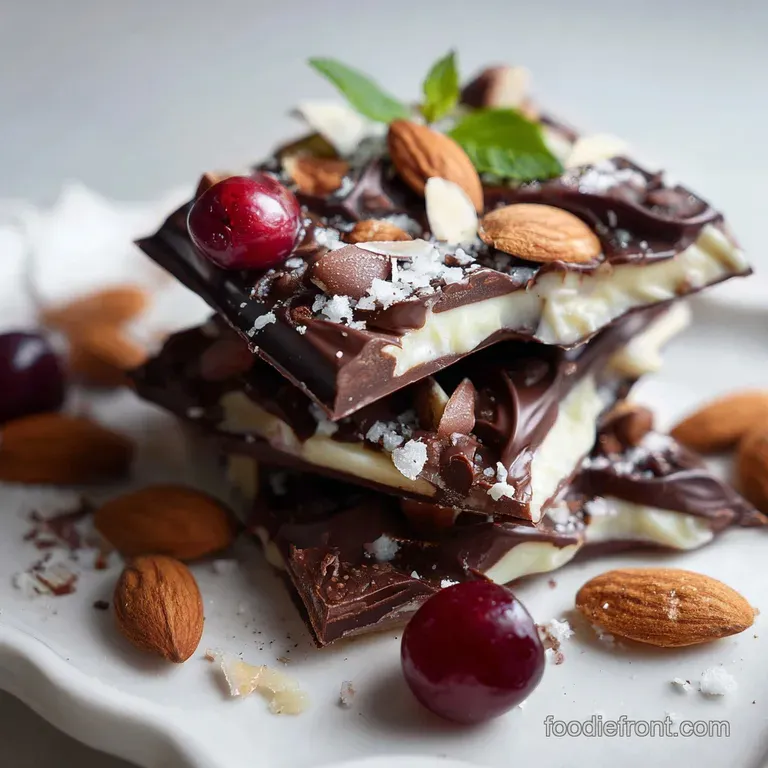
- Time: Active 10 minutes, Passive 15 minutes, Total 25 minutes
- Flavor/Texture Hook: Deeply toasted nuttiness with a velvety, sharp dark chocolate shatter.
- Perfect for: Holiday gifting, edible favors, or a low effort sweet tooth fix.
Making The Best Chocolate Almond Bark
The first time I tried making this, I made a massive mistake: I used pre roasted, salted almonds from a tin. It was fine, sure, but it lacked that soul warming aroma that makes a kitchen feel like a boutique confectionery. Now, I always start by tossing raw almonds into the heat myself.
There is a specific moment, right around the eight minute mark, where the air starts to smell like toasted caramel and woodsmoke. That is the signal that your bark is going to be top tier.
We have all had that "bark" that feels more like a waxy candy bar than a luxury dessert. It usually happens when the chocolate is overheated or the nuts are soft. This Chocolate Almond Bark recipe fixes that by focusing on two things: a precise roast and a controlled melt.
When you bite into a piece, it should resist for a fraction of a second before giving way with a loud, satisfying snap.
Trust me, once you see how those tiny grains of flaky sea salt catch the light against the dark, glossy chocolate, you'll never go back to store-bought versions. It’s about that contrast between the bitter, velvety cocoa and the crunchy, salt kissed almonds.
Let's get into how we make that happen without any fuss or fancy candy thermometers.
Why This Recipe Succeeds
The Maillard Reaction: Roasting the 2 cups of whole raw almonds creates deep aromatic compounds that raw nuts simply lack.
Crystal Stabilization: Adding a tiny bit of neutral oil helps the chocolate stay smooth and manageable while providing a glossy sheen after it sets.
Hydroscopic Balance: Using fine sea salt inside the mix and flaky salt on top ensures every bite has a savory pop that cuts through the sugar.
Fat to Protein Ratio: Dark chocolate with at least 60% cacao provides enough cocoa butter to firmly hold the heavy whole almonds without crumbling.
| Method | Time | Texture | Best For |
|---|---|---|---|
| Stovetop (Double Boiler) | 12 minutes | Silky and glossy | Ultimate control and shine |
| Oven (Microwave Melt) | 8 minutes | Matte and firm | Speed and convenience |
| Slow Cooker | 60 minutes | Thick and dense | Large batches for parties |
If you find yourself loving the process of working with dark chocolate, you might also enjoy experimenting with a White Almond Bark recipe to see how the different fat contents change the setting time.
Essential Preparation Specs
| Component | Science Role | Pro Secret |
|---|---|---|
| Dark Chocolate (16 oz) | Provides structure and snap | Chop it finely to ensure even melting and prevent burning. |
| Raw Almonds (2 cups) | Adds crunch and earthy fats | Roast until the center of an almond is light tan, not white. |
| Neutral Oil (2 tsp) | Lowers melting point slightly | Use avocado or grapeseed oil to keep the flavor profile clean. |
Roasting your own nuts is non negotiable for the best flavor. While the chocolate is the star, the almonds provide the structural integrity that makes it "bark" rather than just a puddle of candy.
Component Analysis
- 16 oz high-quality dark chocolate (60% cacao or higher): Finely chopped. Why this? Higher cacao percentages ensure a firm snap and less oily residue.
- Substitute: Milk chocolate chips (Expect a softer texture and higher sweetness).
- 2 cups whole raw almonds: Unsalted and skin on. Why this? Roasting them fresh provides a much more vibrant nut flavor.
- Substitute: Pecan halves or whole hazelnuts.
- 2 tsp neutral oil: Such as grapeseed or light vegetable oil. Why this? It helps the chocolate melt smoothly and adds a professional gloss.
- Substitute: Refined coconut oil (Adds a very slight tropical scent).
- 1/2 tsp fine sea salt: For the base. Why this? Distributes evenly to season the chocolate itself.
- Substitute: Regular table salt (Use slightly less as it is saltier by volume).
- 1 tsp flaky sea salt: For finishing. Why this? Provides a crunch and a burst of flavor on the tongue.
- Substitute: Maldon salt or smoked salt for a deeper profile.
For those who enjoy a softer, more decadent center, the technique here is a bit different than what you would find in a Chocolate Ball Candy recipe, where we prioritize a creamy ganache over a hard snap.
Essential Kitchen Tools
- Large Baking Sheet: To spread the bark thin enough for a good snap.
- Parchment Paper: Critical for preventing the chocolate from sticking to the metal.
- Heavy Bottomed Pot: Or a microwave safe glass bowl for the melting process.
- Silicone Spatula: To scrape every bit of that velvety liquid gold out of the bowl.
step-by-step Guide
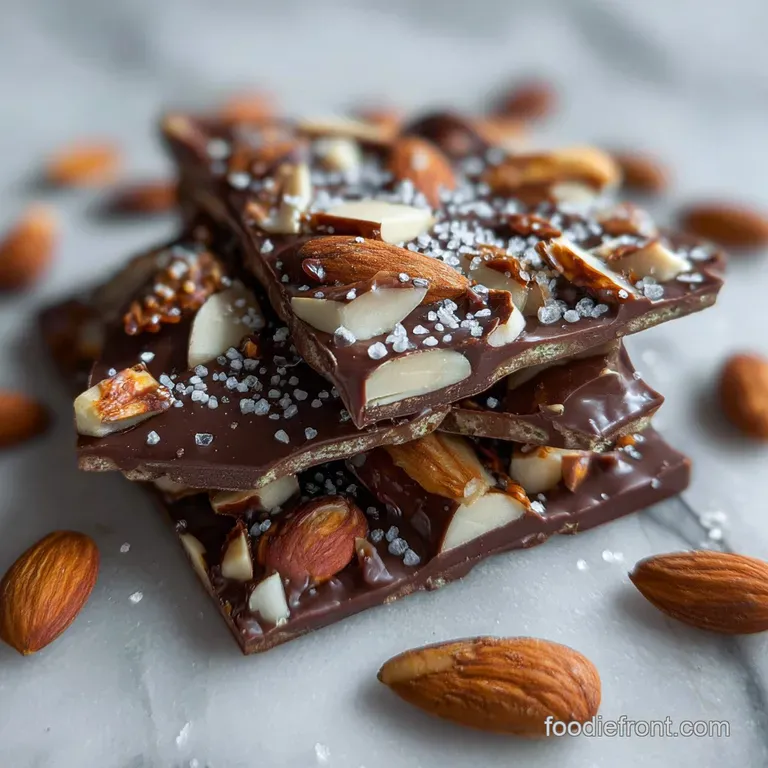
Prepping The Crunchy Base
- Preheat your oven to 350°F (175°C).
- Spread the 2 cups of whole raw almonds on a bare baking sheet.
- Roast for 10-12 minutes until they smell intensely nutty and look golden. Note: Shake the pan halfway through to ensure the bottoms don't scorch.
- Transfer the hot almonds to a bowl and toss with the 1/2 tsp fine sea salt immediately.
Melting The Chocolate Base
- Place two thirds of the finely chopped dark chocolate into a glass bowl.
- Melt using a double boiler over simmering water until the chocolate is smooth and glossy. Note: Ensure no steam or water droplets enter the bowl, or the chocolate will seize.
- Remove from heat and stir in the remaining one third of chopped chocolate and 2 tsp neutral oil.
- Stir constantly until the solid pieces have completely vanished.
Assembling The Final Bark
- Fold the toasted almonds into the melted chocolate mixture.
- Pour the mixture onto a parchment lined baking sheet and spread to 1/2 inch thickness.
- Sprinkle the 1 tsp flaky sea salt across the top while the chocolate is still wet.
- Chill in the refrigerator for 15-20 minutes until the bark is cold and firm to the touch.
Chef's Tip: To get a truly professional look, drop the baking sheet flat onto the counter from a height of about two inches right after spreading. This settles the chocolate into the crevices of the almonds and pops any trapped air bubbles.
Solving Texture Issues
Why Chocolate Seizes
If your chocolate turns into a gritty, clumpy paste, it has likely "seized." This is usually caused by a single drop of water getting into the mix or overheating. Dark chocolate is particularly sensitive to temperature spikes.
| Problem | Root Cause | Solution |
|---|---|---|
| Gritty Texture | Overheating the cocoa solids | Melt over lower heat; remove when 80% melted and stir to finish. |
| Soft or Tacky Bark | Improper tempering/cooling | Add a bit more solid chocolate at the end (seeding) and chill longer. |
| Almonds Falling Off | Chocolate set too fast | Ensure nuts are still slightly warm when folding them into the melt. |
One mistake I once made was trying to use a wet spatula to stir the pot. It turned my beautiful dark chocolate into a brick instantly. Always make sure your tools are bone dry.
Common Mistakes Checklist:
- ✓ Never use high heat; low and slow prevents the cocoa butter from separating.
- ✓ Don't skip the oil; it provides that necessary "slip" for a thin spread.
- ✓ Ensure the almonds are cooled slightly but not cold before mixing.
- ✓ Use a sharp knife to "score" the bark if you want clean squares, or just break by hand for a rustic look.
- ✓ Keep the kitchen cool; humidity is the enemy of a firm set.
Scaling The Recipe
If you are making this for a big event, you can easily double the batch. However, don't just double everything blindly. When moving to 32 oz of chocolate, only use 1.5x the salt and spices to avoid over seasoning. Use two separate baking sheets rather than one giant one to ensure the thickness stays consistent.
For a smaller personal treat, you can halve the recipe using 8 oz of chocolate and 1 cup of almonds. Since the volume is smaller, the chocolate will melt much faster in the microwave check it every 15 seconds to be safe.
| Servings | Chocolate Weight | Almond Volume | Pan Size |
|---|---|---|---|
| 12 People | 8 oz | 1 cup | 8x8 inch |
| 24 People | 16 oz | 2 cups | 10x15 inch |
| 48 People | 32 oz | 4 cups | Two 10x15 inch |
If you have leftover melted chocolate and want to try something different, consider making a small batch of Chocolate Almond Bark recipe with different nuts or even dried fruit.
Flavor Profile Twists
Achieving The Perfect Snap
- 1. Dried Cranberries
- Add these immediately after spreading for a ruby red pop.
- 2. Toasted Coconut
- Sprinkle this over the salt for a snowy white contrast.
- 3. Orange Zest
- Grate fresh orange over the top right before it sets for a vibrant orange hue and citrus aroma.
Superfood Variation
Swap out half the almonds for pumpkin seeds and hemp hearts. The green hues of the seeds look stunning against the dark chocolate. It also adds a different layer of "crunch" that is much finer than the whole almonds. If you like the idea of dipping textures, you might find inspiration in a Marshmallow Dipped Chocolate recipe, which balances the hard shell with a soft interior.
Storing and Saving Scraps
Store your finished bark in an airtight container in the fridge for up to 3 weeks. If you live in a cool climate, it will stay stable at room temperature for about a week, but the fridge keeps that snap much sharper. For long term storage, you can freeze it for up to 3 months.
Just wrap it in parchment and then a layer of foil to prevent freezer burn.
Zero Waste Tip: Don't throw away the "dust" and tiny shards left on the cutting board! I keep a small jar in the freezer for these bits. They are incredible when stirred into morning oatmeal, sprinkled over vanilla ice cream, or folded into cookie dough.
Perfect Serving Pairings
This bark is quite rich, so it pairs beautifully with something acidic or bubbly. A glass of cold Prosecco or a sharp raspberry coulis can cut right through the heavy cocoa fats. If you are serving this as part of a dessert board, place it next to some tart green apple slices.
Myths about Bark:Myth: You must use expensive couverture chocolate. Truth: While high-quality bars are better, even standard baking bars work perfectly if you don't overheat them. Myth: The almonds must be blanched (skinless).
Truth: The skins actually hold a lot of the toasted flavor and provide a better "grip" for the chocolate.
Once you have mastered this Chocolate Almond Bark, you'll find it is the most requested item in your repertoire. It’s simple, impressive, and carries that unmistakable taste of something made with actual care. Happy roasting!
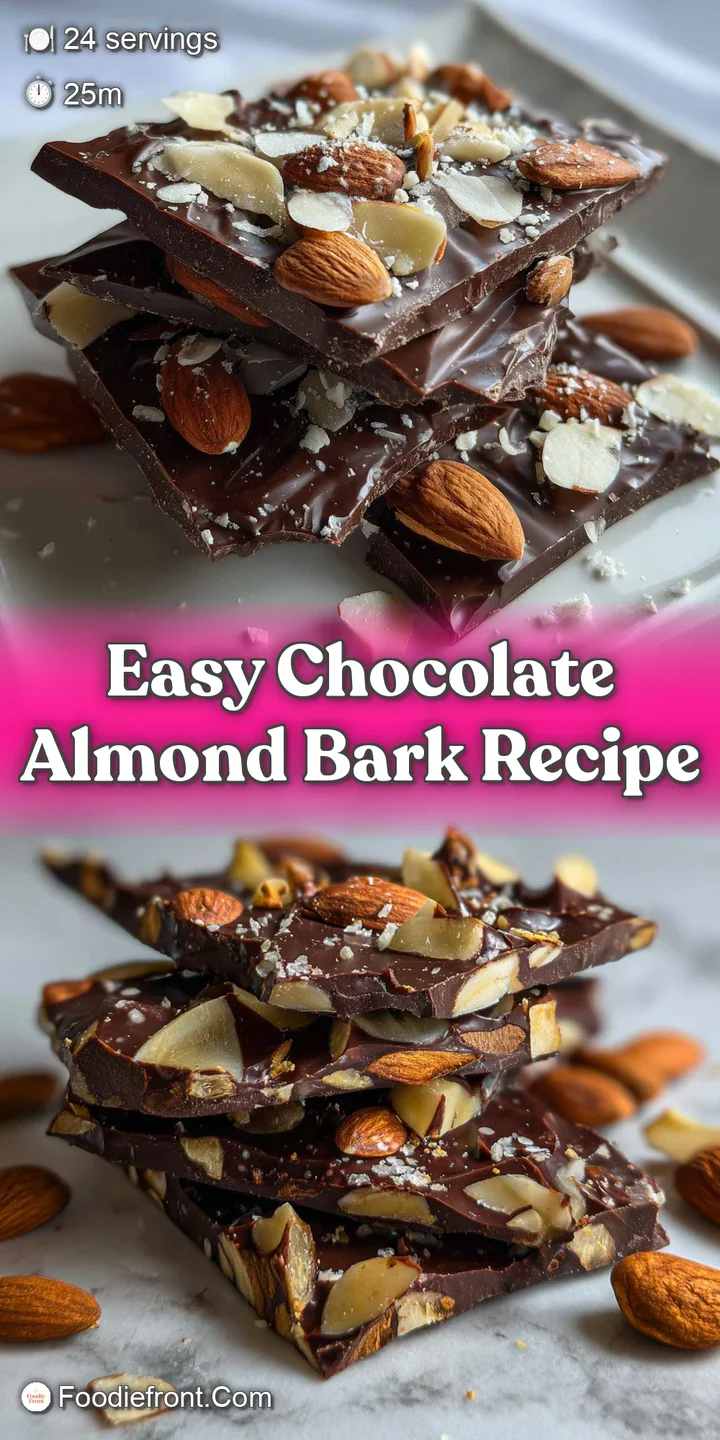
Recipe FAQs
What is almond bark chocolate?
It is typically a candy coating made from vegetable fats rather than pure cocoa butter. Traditional "almond bark" often refers to a simple confectionary coating mixed with roasted almonds, designed to set up hard and shiny.
Is almond bark the same thing as melting chocolate?
No, they are functionally different but often used interchangeably. Real melting chocolate contains cocoa butter, giving it a superior flavor and melt, while commercial bark uses palm kernel oil, which is cheaper but lacks the same mouthfeel.
Is almond bark healthier than chocolate?
No, almond bark is generally less healthy than high cacao dark chocolate. Bark often contains more sugar and uses less healthy vegetable fats instead of cocoa butter; the nuts provide the main nutritional benefit here.
Does Aldi have almond bark?
Yes, Aldi often stocks chocolate covered nut clusters or seasonal almond bark. Availability depends heavily on location and time of year, especially around major holidays like Christmas.
How to roast almonds for the best texture?
Roast raw almonds at 350°F (175°C) for 10-12 minutes until aromatic. Shaking the pan halfway ensures even toasting, bringing out the deep, warm flavors necessary for a perfect bark.
Can I use milk chocolate instead of dark chocolate for this bark?
Yes, you absolutely can substitute milk chocolate for a sweeter result. Be aware that milk chocolate has more sugar and less cocoa solids, meaning the final bark will be slightly softer and less likely to achieve a sharp snap.
How to get a glossy, professional finish on my bark?
Stir in a small amount of neutral oil and ensure the chocolate is perfectly melted without overheating. This technique stabilizes the fats, similar to how you control fat ratios when whipping up a Simple Vanilla Mug recipe.
Chocolate Almond Bark Recipe
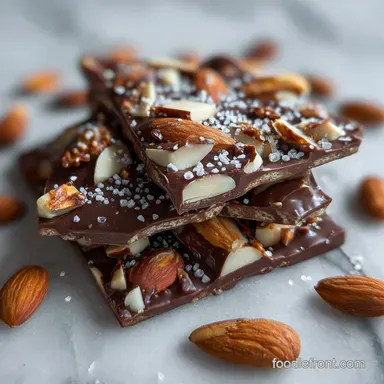
Ingredients:
Instructions:
Nutrition Facts:
| Calories | 183 kcal |
|---|---|
| Protein | 3.6 g |
| Fat | 13.3 g |
| Carbs | 12.3 g |
| Fiber | 3.0 g |
| Sugar | 7.3 g |
| Sodium | 101 mg |
