Rotisserie Chicken Seasoning Blend
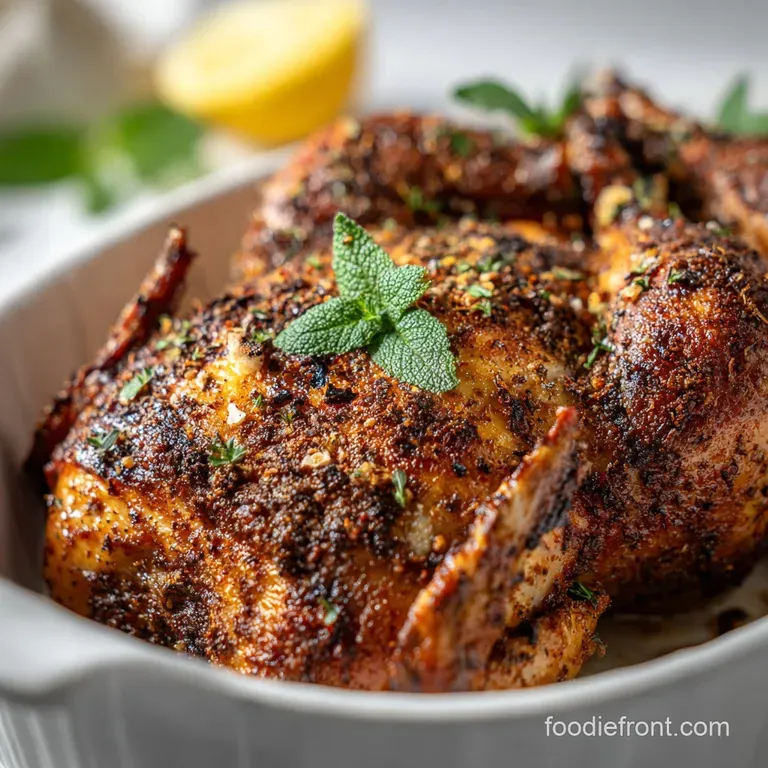
- Time: Active 5 minutes, Passive 0 minutes, Total 5 minutes
- Flavor/Texture Hook: Smoky, savory, and shatter crisp
- Perfect for: Sunday family roasts or quick weeknight meal prep
- Creating a Perfectly Balanced Rotisserie Chicken Seasoning for Family Dinner
- Understanding the Essential Specs for This Flavorful Blend
- Sourcing Quality Ingredients for Your Homemade Chicken Rub
- Minimal Tools Required for Prepping This Simple Seasoning
- Step by Step Method for Applying Your Rub
- Avoiding Common Mistakes for the Crispiest Skin Possible
- Adapting Your Spices for Specific Dietary Needs and Preferences
- Keeping Your Spice Mixture Fresh for Future Family Meals
- Creative Ways to Use Your Rub for Maximum Flavor
- Critical Level of Sodium
- Rotisserie Chicken Seasoning FAQs
- 📝 Recipe Card
Creating a Perfectly Balanced Rotisserie Chicken Seasoning for Family Dinner
The aroma of a chicken roasting in the oven is, quite honestly, the ultimate "welcome home" hug. You know that specific smell from the grocery store entrance? That savory, slightly sweet, deeply smoky scent that makes your mouth water instantly?
We're recreating that exact magic today, but without the mystery additives or excessive sodium. I've spent years tweaking this because my kids always fought over the "crunchy parts," and I realized the secret wasn't just the heat, it was the specific ratios in the rub.
We've all been there where the chicken looks beautiful but tastes like absolutely nothing once you get past the skin. Or worse, the skin is soft and sad. This Rotisserie Chicken Seasoning solves both problems.
It uses a mix of heavy hitting spices that penetrate the meat while the sugar and salt work together to create a lacquered, mahogany finish that literally crackles under your knife. It’s the kind of recipe that makes a basic four pound bird feel like a celebration.
The best part is that you probably have every single one of these ingredients in your cabinet right now. I don't believe in making things harder than they need to be, especially on a Tuesday night when homework is happening and the dog is barking. This is a "measure, shake, and go" situation.
Trust me, once you see how much better this tastes than the store-bought packets, you'll never go back to those little envelopes again.
Understanding the Essential Specs for This Flavorful Blend
The Science of Why it Works: The sugar triggers the Maillard reaction at lower temperatures, creating a deep brown color and complex flavors. Meanwhile, the coarse salt draws out surface moisture through osmosis, allowing the skin to dehydrate and become brittle crisp instead of rubbery.
- Maillard Reaction: This is the chemical dance between amino acids and reducing sugars that gives browned food its distinctive flavor.
- Osmotic Pressure: Salt pulls water from the cells to the surface, where it evaporates, concentrating the chicken's natural juices.
- Thermal Conductivity: The oil or fat you use with the rub helps transfer heat evenly across the uneven surface of the bird.
- Hygroscopic Balance: The brown sugar absorbs just enough moisture to create a sticky glaze that holds the herbs in place.
| Bird Weight | Internal Temp | Rest Time | Visual Cue |
|---|---|---|---|
| 3-4 lbs | 165°F | 15 minutes | Legs move easily in joints |
| 5-6 lbs | 165°F | 20 minutes | Juices run clear when pierced |
| Chicken Thighs | 175°F | 5 minutes | Skin is deep mahogany brown |
Getting the timing right is just as important as the spices. If you're looking for a side dish while the oven does its thing, this blend pairs beautifully with a comforting Broccoli Casserole recipe that handles the same oven temp perfectly.
Sourcing Quality Ingredients for Your Homemade Chicken Rub
| Ingredient | Science Role | Pro Secret |
|---|---|---|
| Smoked Paprika | Color & Phenols | Provides the "fire roasted" look without a grill. |
| Coarse Sea Salt | Moisture Control | Larger grains dissolve slowly, preventing an over salted exterior. |
| Dark Brown Sugar | Caramelization | The molasses content adds depth and helps the rub stick. |
| Dried Rubbed Sage | Aromatic Bridge | Connects the earthy poultry notes with the sharp garlic. |
I always tell my friends to check the age of their spices before starting. If your thyme smells like dust, your chicken will taste like dust. Buy small amounts of high-quality spices from places with high turnover so you’re always getting the most punch for your buck.
For the base of our Rotisserie Chicken Seasoning, we are using: 3 tbsp smoked paprika Why this? Essential for that iconic deep red rotisserie color and backyard smoke flavor. 2 tbsp coarse sea salt Why this? It provides a crunch and controls moisture better than
fine table salt. 1 tbsp garlic powder 1 tbsp onion powder 1 tsp dried thyme 1 tsp dried rubbed sage 1 tsp cracked black pepper 0.5 tsp cayenne pepper Why this? Just enough to wake up the taste buds without being "spicy." 1 tbsp dark brown sugar
Minimal Tools Required for Prepping This Simple Seasoning
You really don't need much to get this done. I’m a big fan of the "one jar" method. I use a small glass mason jar (the 4 ounce size is perfect) to mix everything. It saves me from washing extra bowls, and if I have leftovers, I just pop the lid on and put it in the pantry.
You'll also want a small whisk or even just a fork to break up any clumps in the brown sugar.
The only other thing I highly recommend is a digital meat thermometer. You can't guess doneness by looking at the skin. Sometimes the sugar makes the bird look done before the inside has reached a safe temperature. Using a thermometer ensures you don't end up with dry, stringy meat.
It's the difference between a "good" dinner and one the family begs for every week.
step-by-step Method for Applying Your Rub
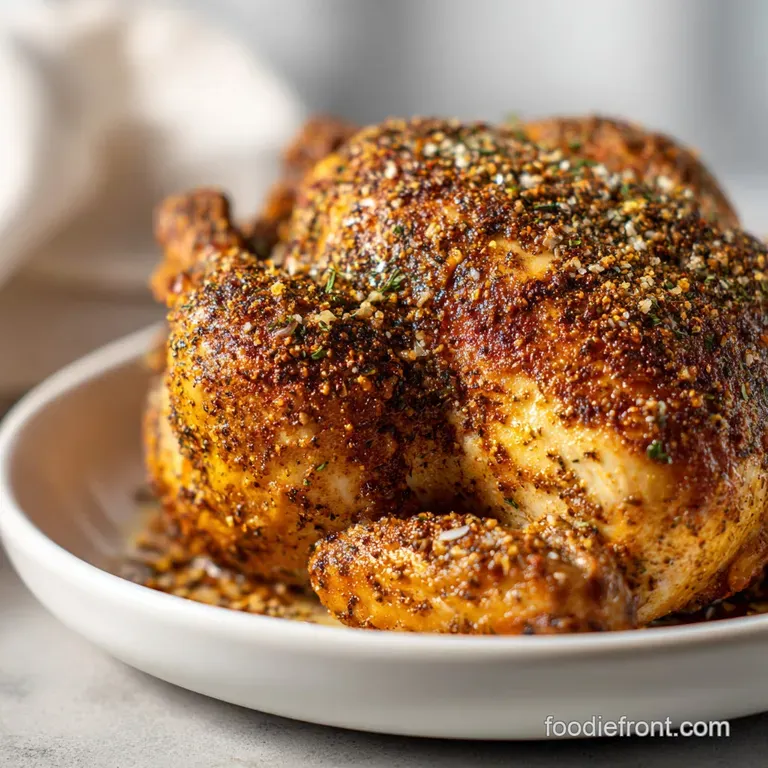
1. The Blending Phase
Combine the smoked paprika, sea salt, garlic powder, onion powder, thyme, sage, black pepper, cayenne, and brown sugar in your small jar. Use a fork to press out any lumps in the brown sugar. Note: You want a uniform color throughout the mix so every inch of the chicken gets the same flavor.
2. Prepare the Surface
Pat the chicken completely dry with paper towels. Note: Moisture is the enemy of crispiness; if the skin is wet, the chicken will steam instead of roast.
3. Apply the Fat
Rub the chicken all over with a light coating of olive oil or softened butter. Note: This acts as the "glue" for your Rotisserie Chicken Seasoning.
4. Season the Cavity
Sprinkle about a teaspoon of the rub inside the cavity of the bird. Note: This seasons the meat from the inside out as the juices circulate.
5. Generous Outer Coating
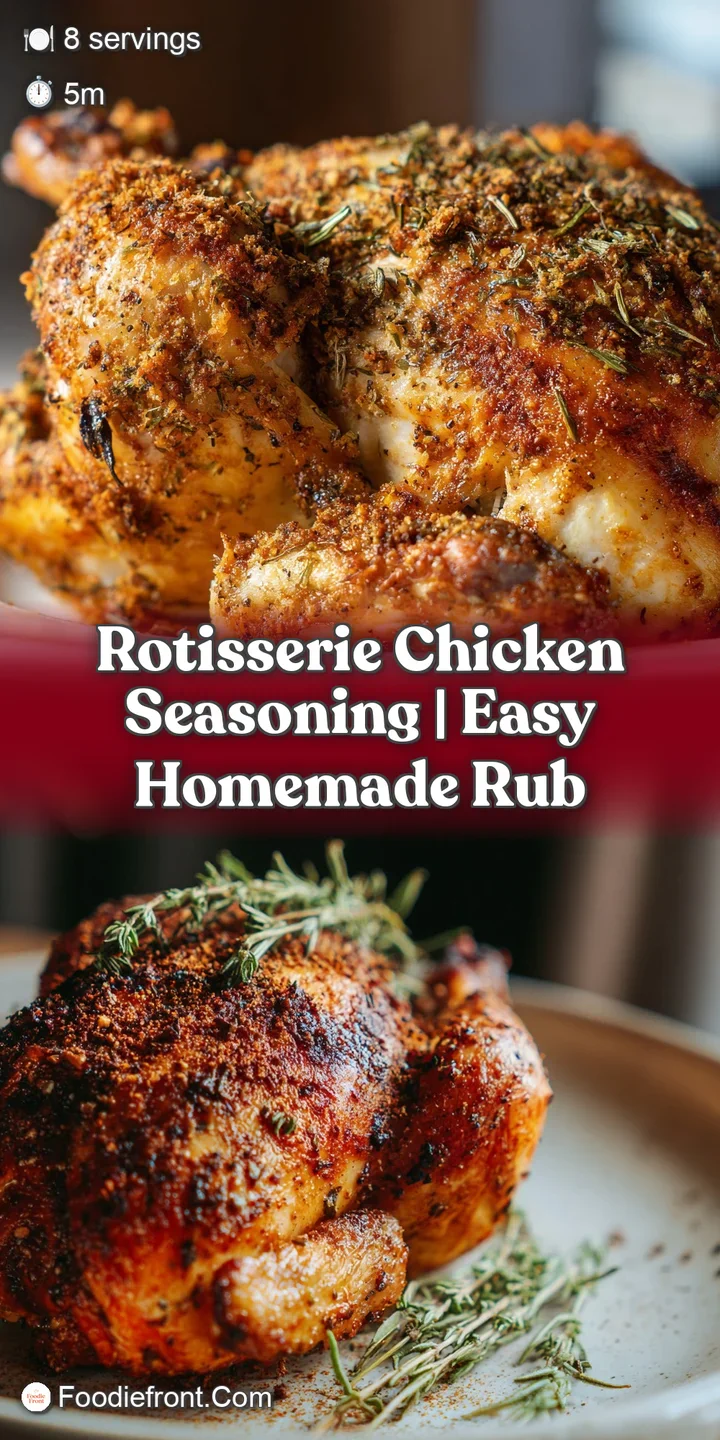
Sprinkle the rub over the bird, starting with the underside and finishing with the breast side up. Note: Don't be shy; use enough to cover the skin entirely.
6. The Massage
Gently press the seasoning into the skin with your hands. until the bird is evenly coated in a dark orange red layer.
7. Optional Chill
If you have time, let the seasoned chicken sit uncovered in the fridge for 30 minutes. Note: This allows the salt to start its work on the skin's texture.
8. Roast the Bird
Place in a preheated oven at 400°F. Bake until the skin is dark, blistered, and the internal temperature hits 165°F.
9. The Critical Rest
Remove from the oven and let it sit on the counter for at least 15 minutes. Note: This allows the fibers to relax and reabsorb the juices so they don't run out when you carve.
Avoiding Common Mistakes for the Crispiest Skin Possible
Why Your Skin Is Soggy
If your chicken comes out looking pale and feeling rubbery, it's usually due to steam. This happens if the chicken wasn't dried properly or if you roasted it in a pan that was too deep, trapping moisture around the bottom of the bird.
Using a roasting rack to lift the chicken up allows hot air to circulate underneath, ensuring the bottom skin is just as good as the top.
| Problem | Root Cause | Solution |
|---|---|---|
| Burnt Surface | Oven rack too high | Move chicken to the middle or lower third of the oven. |
| Bland Meat | Seasoning didn't penetrate | Apply rub 4-12 hours in advance and keep in fridge. |
| Gritty Texture | Salt grains too large | Pulse the finished rub in a spice grinder for 2 seconds. |
Another common slip up is "peeking." Every time you open that oven door to check on the progress, you drop the temperature significantly. This slows down the rendering of the fat under the skin. Trust your timer and your thermometer, and keep that door closed!
- ✓ Pat the bird bone dry with paper towels before adding oil.
- ✓ Don't skip the sugar; it’s vital for that deep rotisserie color.
- ✓ Use a roasting rack to allow 360 degree airflow.
- ✓ Let the bird reach room temperature for 20 minutes before roasting.
- ✓ Never baste with watery juices, as this softens the skin you worked hard to crisp.
Adapting Your Spices for Specific Dietary Needs and Preferences
I know many families are watching their sugar or salt intake. The beauty of a homemade Rotisserie Chicken Seasoning is that you are the boss of the ingredients. If you need to cut the salt, you can reduce it by half, though you might lose some of that specific "crunch." Just compensate with a little extra black pepper or a squeeze of lemon juice right before serving to brighten the flavors.
1. The sugar-free Option
If you're keto or avoiding sugar, simply omit the brown sugar. To get that same golden color, add an extra teaspoon of smoked paprika and a half teaspoon of turmeric. It won't have the same "glaze" effect, but it will still taste incredible and look beautiful on the table.
2. The Herb Heavy Variation
Some people prefer a more "garden style" chicken. You can double the thyme and sage, and add a teaspoon of dried rosemary. This makes the chicken smell like a classic Thanksgiving dinner. If you really love those crispy bits, you can even use this rub on Fried Chicken Skins recipe for a snack that is honestly addictive.
| Original Ingredient | Substitute | Why It Works |
|---|---|---|
| Dark Brown Sugar | Coconut Sugar | Similar caramel notes but lower glycemic index. |
| Smoked Paprika | Liquid Smoke (1 drop) | Use if you only have plain paprika; adds the depth. |
| Coarse Sea Salt | Himalayan Pink Salt | Provides the same mineral punch and moisture draw. |
Keeping Your Spice Mixture Fresh for Future Family Meals
I usually make a triple batch of this because it disappears so fast. Store your Rotisserie Chicken Seasoning in an airtight glass jar in a cool, dark place like a pantry or a cupboard away from the stove. Heat and light are the enemies of dried herbs.
In a proper jar, this blend will stay potent for up to 6 months.
Chef's Tip: If you notice the brown sugar has hardened into a brick, don't throw it out! Add a small piece of a terracotta "sugar saver" or even just a clean marshmallow to the jar for 24 hours. It will soften the sugar right back up without ruining the spices.
If you have leftovers of the actual cooked chicken, the bones are liquid gold. Don't toss them! Put the carcass in a big pot with some celery, carrots, and water, and simmer it for a few hours.
Because of the smoked paprika and sage in the rub, your homemade stock will have a deep, rich flavor that makes the best soup you've ever had.
Creative Ways to Use Your Rub for Maximum Flavor
While this was designed for a whole bird, I use this seasoning on almost everything. It is a "workhorse" in my kitchen. My favorite shortcut is using it on a store-bought rotisserie chicken that feels a little bland.
I'll just sprinkle a bit more on top and pop it under the broiler for two minutes to wake up the flavors.
1. Roasted Root Vegetables
Toss cubed sweet potatoes, carrots, and red onions in olive oil and a tablespoon of this rub. The brown sugar in the seasoning helps the vegetables caramelize beautifully in the oven. It’s a one pan side dish that requires zero effort but tastes like you spent an hour on it.
2. The Best Popcorn Ever
Next time you're having a movie night, melt some butter and toss it with your popcorn, then sprinkle just a tiny bit of this seasoning over it. It sounds weird, I know, but that smoky sweet salty combo is better than any store-bought flavored popcorn.
- Sunday Roast: Perfect for the traditional whole bird.
- Air Fryer Wings: Toss wings in the rub (add 1 tsp baking powder for extra crunch) and air fry at 400°F.
- Pork Chops: This rub works surprisingly well on thick cut bone in pork chops.
- Grilled Corn: Rub onto corn on the cob before wrapping in foil and grilling.
Debunking Common Kitchen Myths
One big myth is that you need to baste your chicken every 15 minutes to keep it moist. In reality, every time you pour liquid over the skin, you're ruining the crispness we worked so hard for. The moisture comes from not overcooking the meat, not from pouring juices over the outside.
Another one I hear a lot is that salt "dries out" the meat. While salt does draw moisture to the surface initially, it eventually reabsorbs into the muscle fibers, seasoning the meat deeply and actually helping it hold onto its juices during the over high heat roast. Trust the process!
Critical Level of Sodium
1742 mg mg of sodium per serving (76% of daily value)
The American Heart Association recommends limiting sodium intake to about 2,300mg per day for overall health.
Sodium Reduction Tips for This Recipe
-
Reduce Sea Salt-25%
Coarse sea salt is the major contributor to sodium in this recipe. Reduce the amount of sea salt by half, from 2 tbsp to 1 tbsp, to significantly lower sodium.
-
Eliminate Sea Salt-25%
Completely eliminate the 2 tbsp of sea salt from the recipe. The other spices will still provide flavor, and you can always add a small pinch of salt at the end to taste.
-
Adjust Paprika-5%
Increase the smoked paprika to 4 tbsp for a richer flavor to compensate for the reduced salt. This will help maintain the desired taste profile.
-
Fresh Herbs
Experiment with fresh herbs like rosemary or oregano to enhance the flavor without adding sodium. Fresh herbs often have a more potent flavor than dried, so use them judiciously.
-
Fresh Garlic
Consider replacing the garlic powder with fresh minced garlic. Fresh garlic offers a more vibrant flavor and can help to reduce the need for sodium.
-
Fresh Onion
Consider replacing the onion powder with finely minced fresh onion. Fresh onion offers a more vibrant flavor and can help to reduce the need for sodium.
Rotisserie Chicken Seasoning FAQs
What is the best seasoning for rotisserie chicken?
A blend of smoked paprika, salt, garlic powder, onion powder, thyme, sage, black pepper, cayenne, and brown sugar. This combination creates a savory, slightly sweet flavor with a deep color and crispy skin.
What do you season roast chicken with?
A robust rub is key. Typically, this includes salt, pepper, garlic powder, onion powder, and often herbs like rosemary or thyme. For rotisserie style flavor, smoked paprika and a touch of brown sugar are essential.
How do I spice up my rotisserie chicken?
Add a blend of spices and a touch of sweetness. Smoked paprika provides color and depth, while brown sugar helps caramelize the skin for a delicious crust. Consider a pinch of cayenne for a subtle kick.
What herbs are good for rotisserie chicken?
Thyme, sage, and rosemary are classic choices. These herbs offer earthy and slightly peppery notes that complement chicken beautifully. Dried versions work well in rubs and penetrate during the roasting process.
Can I make rotisserie chicken seasoning ahead of time?
Yes, absolutely. Mix all your dry ingredients in an airtight container and store in a cool, dark place like your pantry. It will stay fresh for up to 6 months, making weeknight meals a breeze.
What's the secret to crispy rotisserie chicken skin?
Dry skin and high heat are crucial. Ensure the chicken is patted completely dry before seasoning. Roasting at a higher temperature, around 400°F (200°C), helps render the fat and crisp the skin effectively.
Can I use this seasoning on other meats?
Yes, this rub is versatile. It works wonderfully on pork chops, roasted root vegetables, or even as a flavor boost for popcorn. If you master the flavor balancing here, you'll find it elevates many dishes, much like the techniques in our Ground Turkey Stroganoff: Healthy Comfort Dish.
Rotisserie Chicken Seasoning
Ingredients:
Instructions:
Nutrition Facts:
| Calories | 22 calories |
|---|---|
| Protein | 0.7 g |
| Fat | 0.4 g |
| Carbs | 5.0 g |
| Fiber | 1.2 g |
| Sugar | 1.5 g |
| Sodium | 1742 mg |
