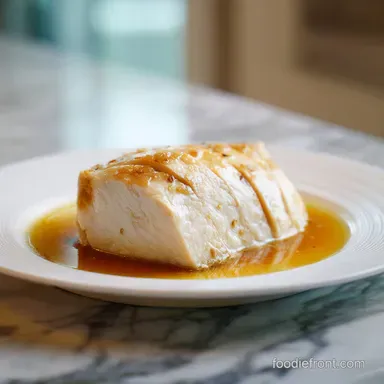
Silky Steamed Chicken Breast

- Total40 Mins
- Calories428 kcal
- CuisineCantonese
- Time: 10 min active + 10 min marinate + 15 min cook + 5 min rest
- Make it when: you need a high-protein dinner that doesn't require scrubbing greasy pans
- Pairs with: steamed bok choy or brown rice
Steamed Chicken Breast
Few things are more disappointing than steamed poultry that turns out rubbery or flavorless. This occurs when lean breast meat contracts too rapidly during cooking, forcing out moisture and resulting in a tough, eraser-like texture.
To prevent this, use a method known as velveting. Applying a light coating of soy and cornstarch forms a protective layer that locks moisture within the meat fibers. This ensures your steamed chicken breast remains succulent and tender, regardless of the steamer's gentle heat.
The result is a light, fresh meal that provides plenty of protein without feeling overly filling. It allows you to prepare dinner quickly while avoiding the mess and smoke associated with frying.
Key Numbers
For this recipe, precision stops the meat from overcooking. Follow these markers to get the texture right.
| Thickness | Internal Temp | Rest Time | Visual Cue |
|---|---|---|---|
| 1 inch | 165°F (74°C) | 5 minutes | Opaque white, no pink |
What You'll Need
Keep the ingredients simple. The soy and ginger do the heavy lifting here.
For the Chicken
- 1 lb chicken breast, sliced into 1-inch thick medallions Why this? Consistent thickness ensures even cooking.
- 1 tbsp reduced-sodium soy sauce
- 1 tsp cornstarch Why this? It creates the protective gel layer.
- 1 tsp sesame oil
- 1/4 tsp white pepper
For the Ginger Soy Sauce
- 2 tbsp reduced-sodium soy sauce
- 1 tbsp chicken broth
- 1 tsp fresh ginger, finely grated
- 1 clove garlic, minced
- 1 tsp honey
The cornstarch is the most important part. If you skip it, the meat will likely be dry.
How It Comes Together
This isn't about fancy equipment, it's about how the ingredients react to the steam.
- Cornstarch Coating: The starch forms a thin film that locks in moisture and prevents the proteins from tightening too much.
- Gentle Heat: Steam surrounds the meat evenly, which avoids the hot spots you get in a pan.
- The Rest: Letting the meat sit for 5 minutes lets the juices redistribute so they don't all run out the moment you cut into it.
The Cooking Process
Prepare your steamer while you get the meat ready. If you lack a bamboo steamer, a metal colander that fits inside a pot is a perfect alternative.
Step 1: Marinate the meat
In a mixing bowl, toss the sliced chicken breast with 1 tbsp reduced-sodium soy sauce, 1 tsp cornstarch, 1 tsp sesame oil, and 1/4 tsp white pepper. Ensure each piece is evenly coated and let it marinate for 10 minutes.

Step 2: Prepare the steamer
Bring roughly 1-2 inches of water to a boil in your pot.
Step 3: Arrange the chicken
Lay the marinated chicken in a single layer on a heatproof plate, avoiding any overlap. Note: Overlapping pieces will steam slower and cook unevenly.
Step 4: Steam
Place the plate in a metal or bamboo steamer basket, cover with a tight-fitting lid, and steam over medium heat for 12–15 minutes.

Step 5: Check doneness
Confirm with a meat thermometer that the thickest part of the chicken has reached 165°F (74°C).
Step 6: Let it rest
Lift the plate from the steamer and let the chicken rest for 5 minutes.
Step 7: Make the sauce
While the meat rests, whisk together 2 tbsp reduced-sodium soy sauce, 1 tbsp chicken broth, 1 tsp grated ginger, 1 minced garlic clove, and 1 tsp honey in a small bowl.

Step 8: Final touch
Spoon the fresh ginger soy sauce over the rested chicken just before serving.
Avoiding Kitchen Disasters
Water is the enemy of a clean presentation. When steam hits the lid, it turns back into water and drips onto your meat. If you see puddles on your plate, wrap a clean kitchen towel around the lid to catch the droplets.
Another issue is the texture. If the meat feels rubbery, you likely overcooked it. Lean breast has a very narrow window between "done" and "dry." Always use a thermometer rather than relying on the clock.
Water pooling on meat
Condensation drips from the lid onto the chicken.
Rubbery texture
The chicken was steamed for too long or at too high a heat.
| Problem | Fix |
|---|---|
| Puddles on plate | Wrap lid in a kitchen towel |
| Rubbery meat | Use a thermometer to pull at 165°F |
Make It Your Own
You can easily swap the flavors to fit what you have in the pantry. If you want something with a kick, try adding a teaspoon of sriracha or chili garlic sauce to the marinade. For a different profile, you can use a Garlic Butter Seasoning after steaming for a richer taste.
If you're avoiding soy, coconut aminos are a great approximation. Start with a little less than the recipe calls for, as the sweetness varies by brand.
For those who love a more intense flavor, you can try a Gochujang glaze. Mix 1 tbsp gochujang with a splash of honey and sesame oil, then brush it on the chicken during the last 2 minutes of steaming.
What to Serve This With

This dish is light, so it needs a hearty base to make it a full meal. Steamed jasmine rice or quinoa works well because they soak up the extra ginger soy sauce.
Add some greens to the steamer basket during the last 5 minutes of cooking. Bok choy, broccoli, or sliced carrots steam perfectly alongside the meat. If you want a more indulgent side, a Cajun Butter Sauce can be drizzled over the vegetables for a spicy contrast to the ginger.
For a low-carb option, serve the chicken over a bed of sautéed spinach or shredded cabbage. The contrast between the silky chicken and the crunch of the cabbage makes the meal feel more complete.
Critical Sodium Level
1250 mg of sodium per serving (54% of daily value)
American Heart Association recommendation: no more than 2,300 mg of sodium per day
Tips to Reduce Sodium
-
Swap the Soy Sauce
Replace the reduced-sodium soy sauce with coconut aminos, which is a naturally lower-sodium alternative that maintains a similar savory flavor.
-
Choose Unsalted Broth
Substitute the chicken broth with a no-salt-added version or use homemade unsalted stock to cut hidden sodium.
-
Add Fresh Citrus
Squeeze in some fresh lime or lemon juice to provide a bright, acidic contrast that mimics the punch of salt.
-
Amplify Aromatics
Increase the quantity of fresh ginger and minced garlic to build a more robust flavor base without relying on sodium.
-
Enhance with Spices
Add a pinch of crushed red pepper flakes or extra white pepper to introduce heat and depth to the dish.
Frequently Asked Questions
How to steam chicken without a steamer?
Place a heatproof plate inside a pot with 1-2 inches of boiling water. Cover the pot with a tight lid to trap the steam.
Is steaming chicken healthy?
Yes, it is a very healthy method. It cooks the meat thoroughly without adding extra fats or oils.
Is it safe to put raw chicken in a steamer?
Yes, you place the raw, marinated medallions directly onto a plate in the steamer. This allows the meat to cook through safely while remaining tender.
What liquid works best for steaming?
Plain water is the best choice for this recipe. It provides the consistent steam needed to cook the chicken evenly.
Can I use frozen chicken breast?
Thaw the chicken completely before slicing and marinating. Frozen meat will not absorb the soy sauce and cornstarch mixture and will cook unevenly.
How do I prevent dry chicken?
Use a meat thermometer to ensure the thickest part reaches exactly 165°F. Let the meat rest for 5 minutes after cooking to lock in the juices.
What equipment is needed?
You will need a pot, a heatproof plate, and a bamboo or metal steamer basket. This light meal pairs wonderfully with a crisp homemade coleslaw.
How long does it take to steam chicken breast?
Steam the medallions over medium heat for 12 to 15 minutes. The exact timing depends on the thickness of your chicken slices.
Silky Steamed Chicken Breast