Icing Sugar Without Powdered Sugar Method
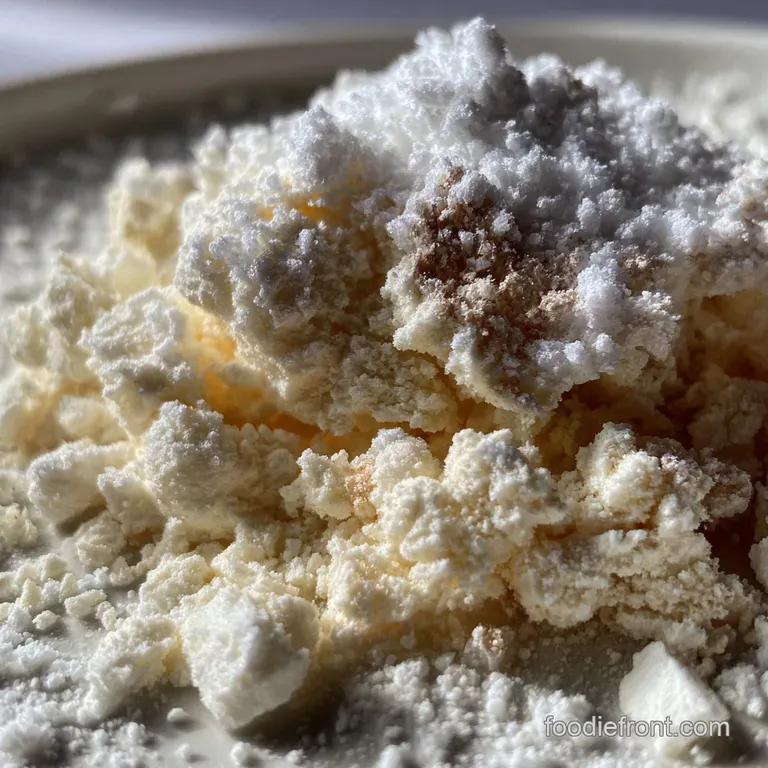
- Time: Active 10 minutes, Passive 10 minutes, Total 20 minutes
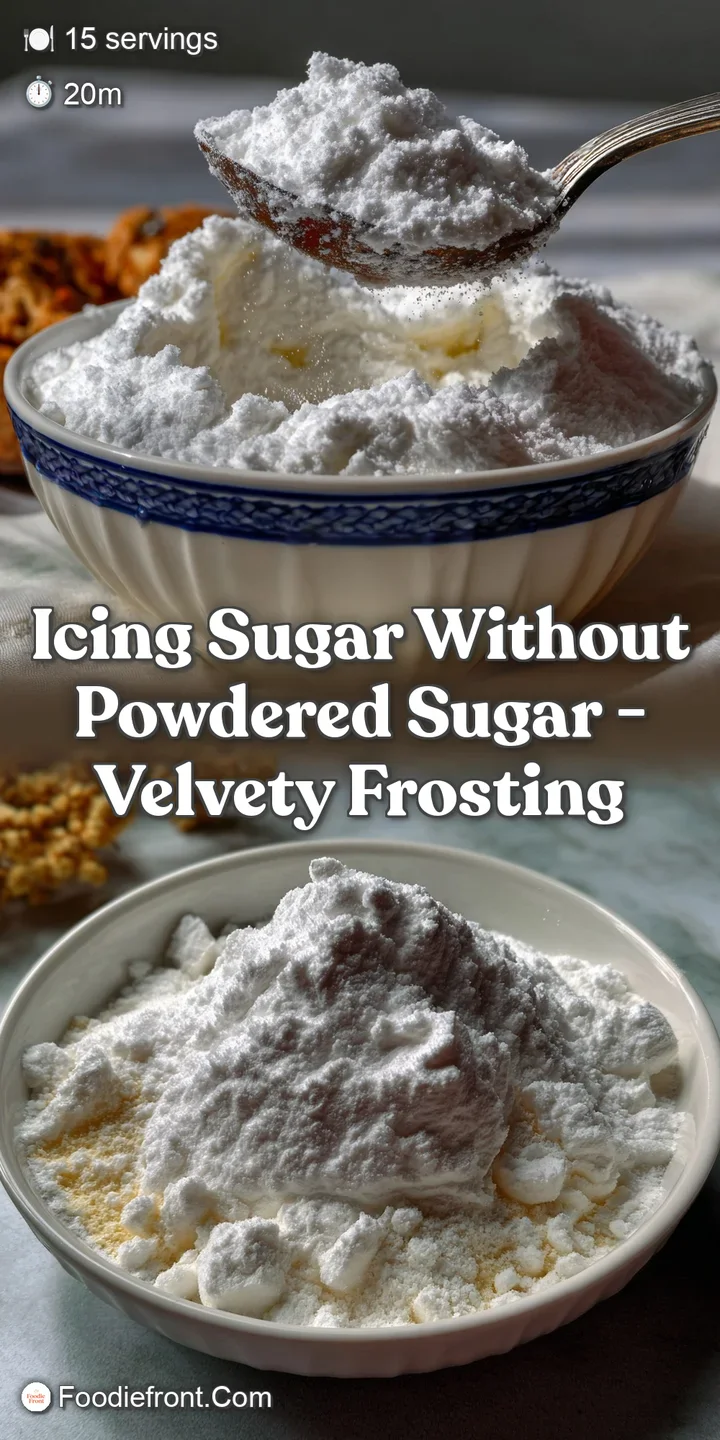
- Flavor/Texture Hook: Velvety smooth with a cloud-like, whipped cream finish
- Perfect for: Last-minute baking emergencies, traditional Red Velvet cakes, or anyone who finds standard frosting too sweet
- Technical Specifications for Baking Success
- Selecting Components for Optimal Texture
- Essential Tools for Smooth Frosting
- Mastering the Cooking Process Steps
- Avoiding Common Kitchen Disasters
- Creative Flavor Variations for Frosting
- Storage and Reheating Guidelines
- Perfect Pairings for Sweet Treats
- Baking Folklore and Scientific Facts
- Common Questions
- 📝 Recipe Card
Eliminate Gritty Textures
The primary challenge when using granulated sugar is the grain. By cooking the sugar with milk and flour, we dissolve every single crystal, ensuring the final product is perfectly smooth. That's the core advantage of perfecting icing sugar without powdered sugar.
Achieving Stable Heat Resistant Peaks
Unlike whipped cream, this frosting holds its shape at room temperature thanks to the starch in the flour. This creates a structural matrix that supports the air bubbles we beat into the butter.
Custom Sweetness Profile Adjustments
You have more control over the sugar levels here than with powdered sugar. Since we are creating an emulsion, you can slightly reduce the sugar without destroying the consistency of the frosting.
This level of control is why so many professional bakers prefer making their own icing sugar without powdered sugar.
Technical Specifications for Baking Success
The Science of Why it Works The magic happens through starch gelatinization, where the heat causes flour particles to swell and absorb the milk, creating a thick paste.
When this cooled paste is whipped into butter, it forms a stable fat-in-water emulsion that traps air without the need for the bulking properties of powdered sugar. The final result of using this method is superior icing sugar without powdered sugar.
- Viscosity Control: The flour roux acts as a stabilizer, preventing the butter from melting as easily as it would in a standard buttercream.
- Molecular Bonding: Cooking the sugar directly into the milk ensures that the sucrose molecules are fully hydrated and won't recrystallize later.
- Aeration Potential: Softened butter whipped with a cooled starch base can hold significantly more air than butter mixed with heavy powdered sugar.
- Unlike traditional buttercream (15 min, gritty): This boiled method takes 20 minutes but provides a much more refined, professional mouthfeel with zero graininess.
Proportional Adjustments
| Original Batch | Scaling 2x | The Logic |
|---|---|---|
| 240ml Milk | 430ml Milk | Reduce slightly to account for the evaporation paradox in larger pots |
| 30g Flour | 60g Flour | Scale exactly to maintain the starch-to-liquid ratio for thickness |
| 1/4 tsp Salt | 3/8 tsp Salt | Scale flavor to 1.5x to avoid over seasoning the delicate cream base |
Selecting Components for Optimal Texture
| Ingredient | Chemical Role | The Pro Secret |
|---|---|---|
| 200g Granulated Sugar | Humectant and sweetener | Cooking it into the milk prevents any graininess in the final whip |
| 30g All-Purpose Flour | Thickening agent through starch gelatinization | Use King Arthur flour for consistent protein levels and better structure |
| 240ml Whole Milk | Liquid base for hydration | Full fat milk provides the necessary lipids for a creamy, rich mouthfeel |
| 225g Unsalted Butter | Lipid structure and aeration medium | Ensure butter is exactly 65°F/18°C for the most stable emulsion |
- 200g granulated white sugar: Why this? It dissolves completely during the boiling phase to remove all grittiness.
- 30g King Arthur all-purpose flour: Why this? Provides the starch structure needed to thicken the milk into a roux.
- 240ml whole milk: Why this? Fat content is critical for the velvety texture and stability.
- 225g Land O'Lakes unsalted butter: Why this? high-quality butter provides better flavor and a firmer set when chilled.
- 10ml Nielsen Massey vanilla extract: Why this? Pure extract adds depth without artificial chemical aftertastes.
Essential Tools for Smooth Frosting
You don't need fancy equipment, but a few specific tools will make this much easier. A heavy bottomed saucepan is vital. It prevents the milk and flour from scorching on the bottom, which would ruin the flavor of your icing sugar without powdered sugar.
I prefer using a stainless steel whisk to keep the mixture moving constantly.
For the whipping stage, a KitchenAid stand mixer with the whisk attachment is the gold standard. It allows you to walk away while the frosting builds volume. However, a powerful hand mixer also works perfectly fine.
Just make sure you have a fine mesh sieve nearby to strain your cooked base; this is the pro move that guarantees no lumps of flour make it into your finished masterpiece.
| Tool | Recommended Brand | Purpose |
|---|---|---|
| Heavy Saucepan | All-Clad Stainless | Even heat distribution to prevent scorching flour |
| Fine Mesh Sieve | OXO Good Grips | Removing tiny lumps for a professional finish |
| Stand Mixer | KitchenAid Artisan | Hands free aeration for maximum fluffiness |
Mastering the Cooking Process Steps
For the Flour Sugar Base
- Whisk 30g all-purpose flour and 200g granulated sugar in your saucepan. Note: Mixing dry ingredients first prevents flour from clumping when liquid is added.
- Pour 240ml whole milk into the dry mixture slowly while whisking. Note: A slow pour creates a smooth slurry before the heat is applied.
- Heat the mixture over medium low heat until it begins to simmer and bubbles form in the center.
- Whisk constantly for 2 3 minutes until the texture thickens into a heavy pudding consistency.
- Remove from heat and stir in 1/4 tsp salt until fully incorporated and the paste looks glossy.
- Strain the hot mixture through a fine mesh sieve into a clean bowl until the base is perfectly translucent and free of solids.
- Press a piece of plastic wrap directly onto the surface of the pudding until no air gaps remain to prevent a skin from forming.
- Cool the mixture completely until it reaches room temperature or roughly 70°F/21°C.
For the Aerated Finish
- Beat 225g softened butter in your KitchenAid mixer for 5 minutes until it becomes pale, almost white, and very fluffy.
- Add the cooled flour pudding one tablespoon at a time until each addition is fully absorbed into the butter.
- Pour in 10ml vanilla extract and whip on high speed for 3 minutes until the frosting doubles in volume and holds a stiff peak.
Chef's Note: If your frosting looks curdled after adding the pudding, your butter was likely too cold. Simply wrap a warm towel around the mixer bowl for 30 seconds and continue whipping. It will come back together! Mastering this technique is the secret to flawless icing sugar without powdered sugar.
Avoiding Common Kitchen Disasters
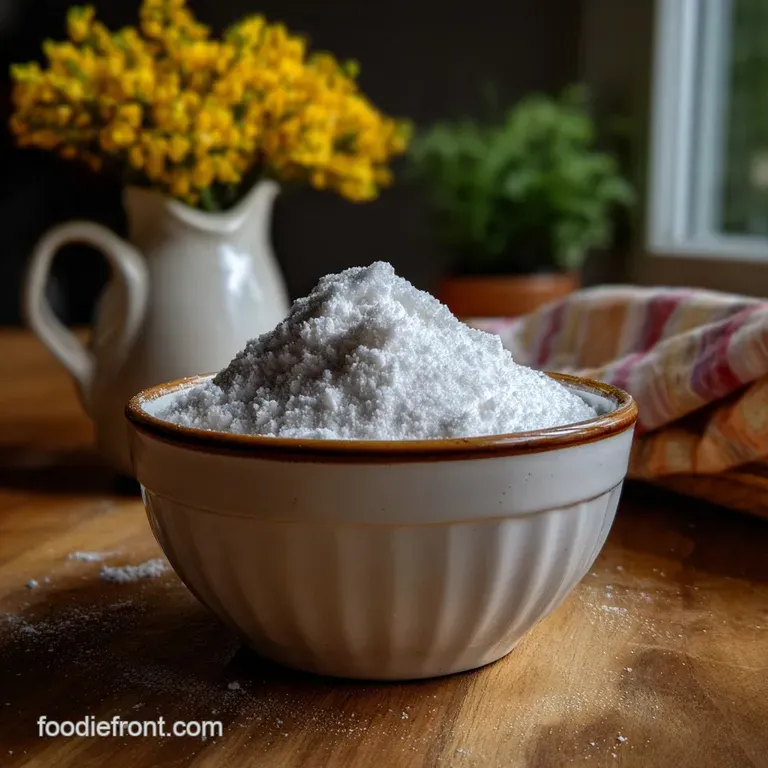
Making icing sugar without powdered sugar is simple, but the temperature is everything. If you try to mix the flour base into the butter while it is still even slightly warm, you will end up with a puddle of melted butter. I have made this mistake exactly once, and it’s a hard lesson to learn.
You must wait for that base to be completely cool.
Another issue is the dreaded "flour taste." This happens if you don't cook the roux long enough. You need that starch to fully gelatinize. Once it thickens, keep it on the heat for another minute or so to "cook out" the raw grain flavor. This ensures your frosting tastes like sweet cream, not a science experiment.
The elimination of that raw taste is a key benefit of this icing sugar without powdered sugar method.
To Prevent Soupy Frosting
If the base is too warm, the emulsion breaks. Starch molecules can't hold onto the fat if the fat is in a liquid state. Always use a thermometer to check that your pudding is below 72°F/22°C before you start the whipping process.
| Problem | Root Cause | The Fix | Pro Protocol |
|---|---|---|---|
| Grainy texture | Sugar didn't dissolve | Cook longer | Whisk sugar into milk before heating |
| Soupy mess | Roux was too hot | Chill the bowl | Pop the whole mixer bowl in the fridge for 15 mins |
| Lumpy finish | Flour clumped up | Use a sieve | Always strain the hot roux through a fine mesh |
Creative Flavor Variations for Frosting
For Rich Chocolate Profiles
To turn this into a chocolate dream, whisk 30g of high-quality Dutch process cocoa powder into the flour and sugar before adding the milk. This allows the cocoa to bloom in the hot liquid, intensifying the chocolate flavor significantly compared to just adding powder at the end.
For dairy-free Alternatives
You can substitute the whole milk with full fat coconut milk or oat milk. Just be aware that the fat content changes the stability slightly. Note: Coconut milk will add a distinct tropical note, while oat milk keeps the flavor more neutral but may result in a slightly softer peak.
People often ask if this dairy-free substitution maintains the quality of icing sugar without powdered sugar; generally, yes, with minor texture adjustments.
- Simple
- Use an offset spatula to create rustic swirls on a 9 inch round cake for a home baked feel.
- Polished
- Load the frosting into a piping bag with a Wilton 2D star tip and create uniform rosettes across the top of cupcakes.
- Restaurant
- Chill the frosting until firm, then use two warm spoons to create an elegant quenelle. Place it on a plate next to a slice of cake with a dusting of extra cocoa powder.
| Plating Level | Key Technique | Visual Result |
|---|---|---|
| Simple | Offset spatula swirls | Rustic, cozy, and inviting |
| Polished | Star tip rosettes | Professional, uniform, and clean |
| Restaurant | Warm spoon quenelle | Artistic, minimalist, and upscale |
Storage and Reheating Guidelines
This frosting stores beautifully because the flour base provides extra stability. You can keep it in an airtight container in the fridge for up to 5 days. However, the butter will firm up significantly when cold, making it impossible to spread directly from the refrigerator.
When you are ready to use it, let it sit on the counter for about an hour. Once it reaches room temperature, put it back in the mixer and whip it for a minute or two. This restores the airy, cloud like texture it had when it was fresh.
I don't recommend freezing this frosting, as the starch water bond in the flour can break during thawing, leading to a grainy or separated texture. You lose all the benefits achieved when learning to make icing sugar without powdered sugar properly.
Zero Waste Tip: If you have leftover frosting, don't throw it away. You can sandwich it between two graham crackers or cookies and freeze them for instant ice cream style treats.
The science here is that the high fat and sugar content prevents the frosting from freezing rock hard, keeping it creamy even at low temperatures.
Perfect Pairings for Sweet Treats
Since this icing sugar without powdered sugar is less sweet than American buttercream, it pairs perfectly with rich, heavy desserts. It is the natural partner for a deep, mahogany colored Devil's Food cake or a traditional Red Velvet.
The subtle dairy notes also complement fruit forward desserts like a lemon sponge or a strawberry layer cake.
In my experience, this frosting is also incredible on pumpkin bread or spice cakes. The buttery finish cuts through the warmth of cinnamon and nutmeg without adding that cloying "sugar hit" that can sometimes distract from the spices.
It’s a sophisticated choice for adult birthday parties or elegant dinner events. Utilizing this method ensures your final product is better than standard icing sugar without powdered sugar alternatives.
Fresh vs Shortcut Comparison:
| Feature | This Fresh Method (Ermine) | Shortcut (American Buttercream) |
|---|---|---|
| Sweetness | Balanced, mild dairy | Extremely high, sugary |
| Texture | Velvety, whipped cream like | Dense, can be gritty |
| Stability | High (due to starch) | Medium (melts easily) |
Baking Folklore and Scientific Facts
Myth: You can't make icing without powdered sugar because it won't be stable. Truth: This is false. While powdered sugar uses cornstarch as a stabilizer, the cooked flour roux in this recipe provides a much stronger structural matrix.
In fact, Ermine frosting was the standard for high end cakes long before mass produced powdered sugar became a kitchen staple.
Myth: Flour in frosting will make it taste like raw dough. Truth: Only if you undercook it! Boiling the milk and flour together for a full two minutes ensures the starch molecules burst and gelatinize, removing any "raw" grain flavor and leaving only a smooth, neutral base for your vanilla and sugar.
Decision Shortcut:If you want a classic Red Velvet finish, use this recipe exactly as written with pure vanilla. If you need a coffee flavored kick, dissolve 1 tsp of espresso powder into the milk while heating.
If you want a citrus twist, fold in the zest of one lemon after the final whip.
This recipe is a testament to the fact that you don't need a pantry full of specialized ingredients to create something truly impressive. By understanding the science of starch and the physics of emulsion, you can turn basic staples into a world class dessert topping. Now, go give that cake the finish it deserves!
Common Questions
Can I substitute the whole milk with skim milk?
No. Full fat milk is critical for lipid structure. Insufficient fat levels result in a weak emulsion that cannot trap air effectively, leading to weeping and collapse.
Does this frosting taste like flour?
Only if undercooked. Starch gelatinization must complete. Boiling the flour milk mixture until it becomes a heavy pudding cooks out the raw grain flavor, creating a neutral base.
How long does the cooked flour base take to cool properly?
Cool completely; below 72°F (22°C) is mandatory. Adding warm pudding to butter causes immediate fat liquefaction, breaking the emulsion and resulting in a greasy, soupy mess.
- Use a room temperature check
- Strain hot base before cooling
- Avoid sealing plastic wrap too tightly
Is this frosting sweeter than standard American buttercream?
This method yields a much less sweet topping. Because the structure relies on cooked starch rather than pure sugar bulk, you gain greater control over the sweetness profile.
Can I use cane sugar instead of granulated white sugar?
Use standard granulated sugar for best results. Raw or turbinado sugars contain molasses impurities that prevent full crystallization when boiled into the liquid base.
Myth: Does this technique eliminate all risks of graininess?
Myth: You can't eliminate graininess without commercial powdered sugar. Reality: Full dissolution of sucrose through boiling into the milk guarantees a smooth texture rivaling commercial products.
Myth: Should I use an electric mixer for whipping the butter?
Myth: A whisk or hand mixer is sufficient for aeration. Reality: A stand mixer is highly recommended because it maintains constant, high speed aeration required to incorporate the heavy, cooled starch base effectively.
Icing Sugar Without Powdered
Ingredients:
Instructions:
Nutrition Facts:
| Calories | 176 kcal |
|---|---|
| Protein | 0.7 g |
| Fat | 12.7 g |
| Carbs | 15.7 g |
| Fiber | 0.1 g |
| Sugar | 14.1 g |
| Sodium | 46 mg |
