Copycat Dinty Moore Beef Stew Recipe
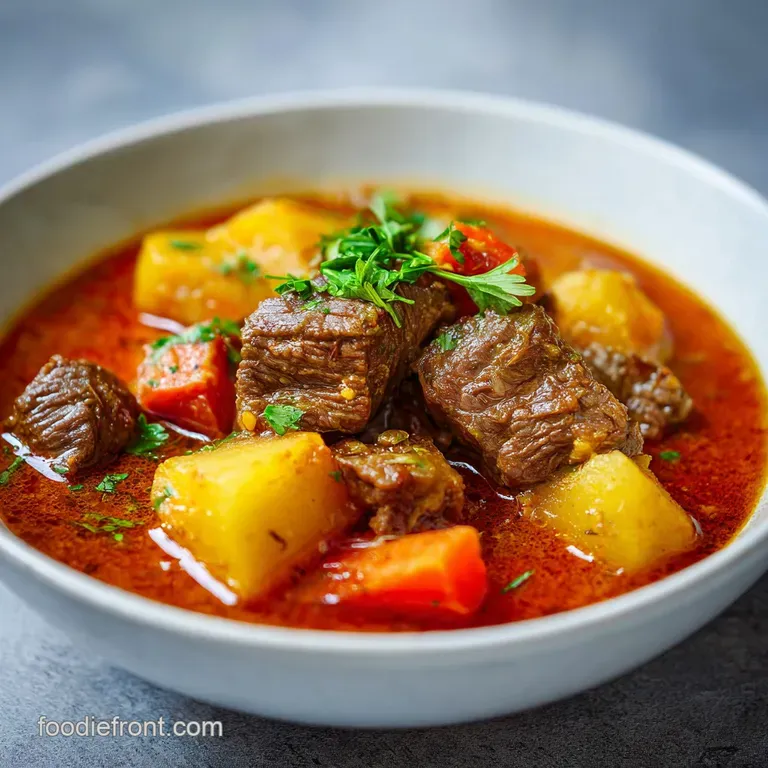
- Time: Active 25 minutes, Passive 4 hours, Total 4 hours 25 minutes
- Flavor/Texture Hook: Savory, shatter tender beef with a thick, silky gravy
- Perfect for: Sunday family dinner or cozy meal prep
- Making the Ultimate Dinty Moore Beef Stew
- Better Than the Tin: Why This Works
- Deep Dive Into Ingredient Roles
- Essential Ingredients and Smart Substitutes
- Essential Equipment for This Recipe
- Step-by-Step Cooking and Prep Flow
- Fixing Common Beef Stew Mistakes
- Adjusting the Batch Size Naturally
- Debunking Common Kitchen Myths
- Storage and Zero Waste Tips
- Perfect Sides for Hearty Stew
- Dinty Moore Beef Stew FAQs
- 📝 Recipe Card
Making the Ultimate Dinty Moore Beef Stew
The second that heavy Dutch oven lid lifts, the aroma hits you like a warm hug from your grandma. I remember standing on a stool in our old kitchen, watching the steam rise as my mom cracked open a tin of the original stuff.
It was our "it’s too cold to go outside" emergency meal, and honestly, that salty, thick gravy was pure magic to a ten year old. But as I got older, I realized the canned version lacked that deep, home cooked soul that only comes from a slow simmering pot on the stove.
We’re going for nostalgia here, but better. I’m talking about big, 1.5 inch chunks of beef that don't just sit there they practically dissolve the moment they hit your tongue.
We want the carrots to be tender but not mushy, and the potatoes to hold their shape while soaking up every drop of that umami packed broth. This isn't a thin soup; it's a thick, hearty hug in a bowl that stays true to the classic Moore beef stew profile.
Right then, let's get into how we turn basic pantry staples into a dinner that’ll have everyone scraping their bowls clean. We aren't doing anything fancy or "gourmet" here we're just doing it right.
If you’ve ever felt like your homemade stews were a bit thin or the meat stayed tough, I’ve been there too. We’ll fix all of that today.
Better Than the Tin: Why This Works
- Collagen Conversion: Using beef chuck is key because the connective tissue breaks down into gelatin after 4 hours of simmering, creating a naturally silky texture.
- Maillard Reaction: Searing the beef in small batches creates a dark, flavorful crust that seasons the entire pot from the bottom up.
- Starch Equilibrium: Potatoes release just enough starch to help the gravy thicken, while a final cornstarch slurry ensures that signature "canned" thickness without the metallic aftertaste.
- Aromatic Layering: Starting with a base of sautéed onion and garlic builds a depth of flavor that a pressure cooker simply can't replicate in twenty minutes.
| Cook Method | Time | Texture Result | Best For |
|---|---|---|---|
| Stovetop | 4 hours | Most tender beef, thickest gravy | Maximum flavor control |
| Slow Cooker | 8 hours (Low) | Very soft veggies, set and forget | Busy work days |
| Dutch Oven | 3.5 hours | Even heating, slightly smoky notes | Traditional Sunday dinner |
If you’re a fan of these kinds of "set it and forget it" meals, you might also love my Tater Tot Casserole Recipe which hits that same childhood comfort note but with a much better crunch.
Deep Dive Into Ingredient Roles
| Ingredient | Science Role | Pro Secret |
|---|---|---|
| Beef Chuck Roast | Provides fat and collagen | Always trim the large fat caps but leave the internal marbling for moisture. |
| Russet Potatoes | High starch content | Peel them to ensure they release enough starch to help thicken the sauce. |
| Beef Bone Broth | Liquid base with protein | Use bone broth over standard stock for a richer mouthfeel and more "body." |
| Tomato Paste | Umami and acidity | Sauté it for 2 minutes until it turns dark brick red to remove the raw metallic tang. |
Whether you're making this or even a quick Beef Sirloin Steak recipe, the quality of your meat and how you sear it will always be the deciding factor in the final flavor.
Essential Ingredients and Smart Substitutes
- 3 lbs Beef Chuck Roast (1.36 kg): Cut into 1.5 inch cubes. Why this? Best balance of fat and collagen for long simmering.
- Substitute: Beef brisket or shanks (adjust cook time as needed).
- 1/2 cup All purpose flour: For coating the beef. Why this? Helps with browning and starts the thickening process.
- Substitute: Cornstarch (use half the amount) for a gluten-free option.
- 1 tsp Sea salt & 1/2 tsp Cracked black pepper: Basic seasoning.
- 3 tbsp Grapeseed or Avocado oil: High smoke point oils. Why this? Prevents the oil from burning during the over high heat sear.
- Substitute: Lard or beef tallow for extra beefy flavor.
- 4 large Carrots (approx. 400g): Cut into 1 inch rounds.
- Substitute: Parsnips for a sweeter, earthier twist.
- 4 large Russet Potatoes (approx. 800g): Peeled and chunked.
- Substitute: Yukon Gold potatoes (keep skins on if preferred).
- 1 large Yellow Onion: Diced small.
- 3 cloves Garlic: Minced fresh.
- 4 cups beef bone broth (946 ml): The liquid foundation.
- 2 tbsp Worcestershire sauce: Adds fermented depth and salt.
- 1 tbsp Tomato paste: For color and umami.
- 2 Bay leaves & 1 tsp Dried thyme: Classic herbal profile.
- 2 tbsp cornstarch + 3 tbsp cold water: The final thickener.
Essential Equipment for This Recipe
For the best results, I highly recommend using a heavy bottomed Dutch oven (like a Lodge or Le Creuset). The thick walls hold heat steadily, which is vital for that 4 hour low simmer.
You'll also need a large stainless steel bowl for tossing the beef in flour and a slotted spoon to move the meat around without losing all the precious oil.
A sharp chef's knife is non negotiable here since you’re cubing 3 pounds of meat and a pile of root vegetables. If you don't have a Dutch oven, a heavy stockpot will work, but you'll need to keep a closer eye on the liquid levels as they can evaporate faster in thinner pots.
step-by-step Cooking and Prep Flow
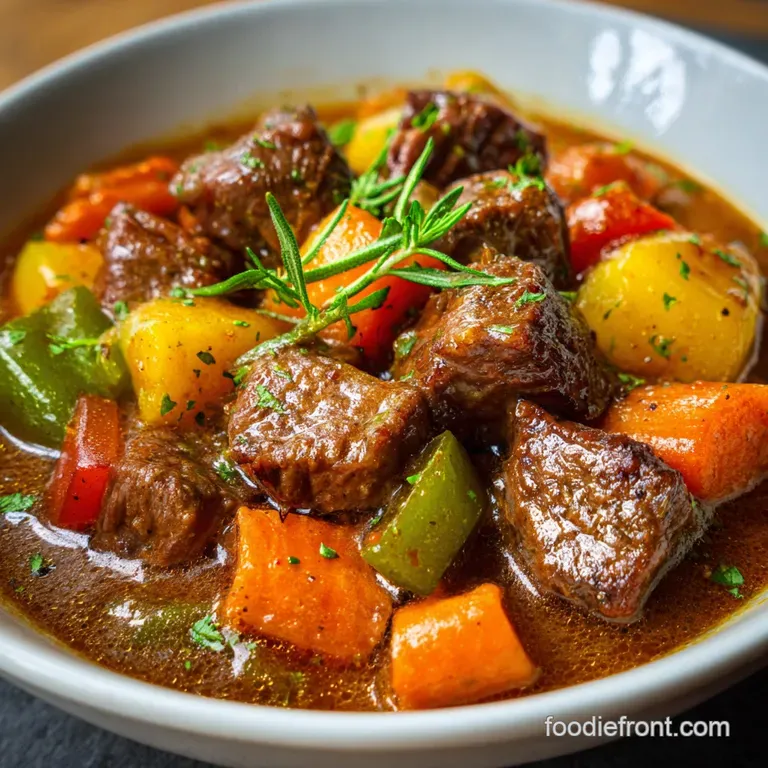
- Prep the Beef. Pat the 3 lbs (1.36 kg) of beef chuck roast completely dry with paper towels. Toss the cubes in a bowl with 1/2 cup flour, 1 tsp salt, and 1/2 tsp pepper until every piece is fully coated. Note: Drying the meat is the only way to get a real sear instead of steaming it.
- Sear in Batches. Heat 3 tbsp oil in your pot over medium high heat. Add the beef in three separate batches, cooking for 3-4 minutes per side until a dark brown crust forms. Remove and set aside.
- Sauté Aromatics. In the same pot, add the diced yellow onion. Cook for 5 minutes, scraping the bottom of the pan to loosen the "fond" (the brown bits). Add the 3 cloves of minced garlic and 1 tbsp tomato paste, stirring for 2 minutes until the paste smells sweet and looks dark.
- Deglaze the Pot. Pour in 1 cup of the beef bone broth. Use a wooden spoon to vigorously scrape the bottom of the pot. Note: This is where all the hidden flavor lives.
- Build the Base. Return the beef to the pot. Add the remaining 3 cups of broth, 2 tbsp Worcestershire, 2 bay leaves, and 1 tsp dried thyme.
- Slow Simmer. Bring the liquid to a boil, then immediately turn the heat to its lowest setting. Cover and simmer for 2 hours 30 minutes until the beef starts to feel tender when poked with a fork.
- Add Vegetables. Stir in the 4 chopped carrots and 4 chunked russet potatoes. Cover again and continue simmering for another 1 hour until the vegetables are fork tender.
- Thicken the Gravy. Whisk 2 tbsp cornstarch into 3 tbsp cold water. Stir this slurry into the bubbling stew.
- The Final Bloom. Cook for an additional 5-10 minutes uncovered until the sauce becomes glossy and thick enough to coat a spoon.
- Rest and Serve. Remove the bay leaves. Let the pot sit for 10 minutes off the heat before serving. This allows the fibers in the beef to relax.
Fixing Common Beef Stew Mistakes
Why Your Beef Stays Tough
If the meat is chewy, it simply hasn't cooked long enough. Beef chuck is full of collagen that only melts after a long time at a low temperature. If you try to rush it by boiling the stew, the muscle fibers will seize up and turn into rubber. Keep it at a gentle bubble, never a rolling boil.
Why Your Gravy Is Thin
This usually happens if the vegetables didn't release enough starch or if the lid wasn't tight enough to allow for slight evaporation. The cornstarch slurry is your "safety net," but make sure the stew is actually simmering when you add it, or the starch won't activate.
| Problem | Root Cause | Solution |
|---|---|---|
| Bland Flavor | Lack of salt or deglazing | Add a splash of Worcestershire or a pinch of salt at the very end. |
| Mushy Potatoes | Added too early | Ensure potatoes only cook for the final 60-75 minutes of the process. |
| Greasy Surface | Too much fat in the chuck | Chill the stew overnight and scrape the hardened fat off the top. |
Common Mistakes Checklist
- ✓ Never crowd the pan during the searing phase; if the meat touches, it steams.
- ✓ Don't skip the tomato paste sauté; it's the secret to that "old fashioned" color.
- ✓ Use cold water for the cornstarch slurry to avoid lumps in your gravy.
- ✓ Resist the urge to peek; opening the lid too often drops the temperature and adds 15 minutes to the cook time.
- ✓ Check your potato size; if they are smaller than 1.5 inches, they will dissolve.
Adjusting the Batch Size Naturally
If you're cooking for a smaller crowd, you can easily halve this recipe. Use a smaller pot (3-4 quarts) and reduce the cooking time by about 20%. When halving, I usually still use a whole onion because it adds so much base flavor.
For doubling the recipe for a big family gathering, keep the salt and spices at 1.5x the original amount first, then taste at the end. You'll need to work in even more batches for searing the beef don't get lazy here!
If the pot is too full, the liquid won't reduce properly, so you might need to simmer the gravy without the lid for the final 20 minutes to get that signature Moore beef stew thickness.
| Goal | Ingredient Adjustment | Cook Time Change |
|---|---|---|
| Feeding 2-3 | Halve everything; use 1 small onion | Reduce passive time by 45 mins |
| Feeding 12+ | Double meat/veg; 1.5x spices | Add 30 mins to total simmer |
| Budget Version | Use half beef, double potatoes | No change to timing |
Debunking Common Kitchen Myths
One big myth is that searing meat "seals in the juices." Science tells us this is false the meat actually loses moisture as it sears. However, we sear it for the flavor created by the Maillard reaction. That crust is what makes the gravy taste like a "Moore" copycat rather than just boiled beef.
Another myth is that you must use expensive wine to make a good stew. While a splash of red can be nice, a high-quality bone broth and Worcestershire sauce provide more than enough complexity for this specific hearty, family style dish. You don't need a $20 bottle of Cabernet to get a "velvety" finish.
Storage and Zero Waste Tips
Storage: This stew is a champion in the fridge. Keep it in an airtight container for up to 4 days. In fact, it's usually better on Tuesday than it was on Sunday because the starches and proteins have more time to mingle.
To reheat, add a splash of water or broth to the pan as it will thicken significantly when cold.
Freezing: You can freeze this for up to 3 months. Tip: If you plan on freezing the whole batch, undercook the potatoes slightly so they don't turn into a grainy mess when thawed. Thaw in the fridge overnight before reheating on the stove.
Zero Waste: Don't throw away those beef trimmings or onion skins! Toss them into a freezer bag. Once the bag is full, boil them with some water and peppercorns to make your own "scrap broth" for the next time you make this recipe.
Also, if you have leftover gravy but no meat, it makes an incredible topping for poutine or mashed potatoes the next day.
Perfect Sides for Hearty Stew
Since this recipe is already loaded with potatoes and carrots, you really want something to soak up the extra gravy or a bit of crunch to balance the "velvety" texture of the beef. A thick slice of buttered sourdough or crusty Dutch oven bread is the classic choice.
If you want to keep it a bit lighter, a simple green salad with a sharp lemon vinaigrette cuts right through the richness of the beef fat. Honestly, though, my family usually just wants a side of honey glazed cornbread. The sweetness of the corn pairs perfectly with the salty, savory depth of the dinty moore beef stew.
Just make sure whatever you serve can handle the weight of that glorious, thick gravy.
Dinty Moore Beef Stew FAQs
Why is Dinty Moore Beef Stew being recalled?
Check current FDA alerts for confirmation. Recalls often happen due to potential undeclared allergens, undeclared ingredients, or process deviations that could lead to bacterial contamination.
How healthy is Dinty Moore Beef Stew?
No, it is generally high in sodium and preservatives. Canned versions rely on high salt content for preservation, and the nutrient density is lower than homemade versions that use fresh vegetables and low-sodium broth.
Can you eat Dinty Moore Beef Stew straight from the can?
Yes, it is technically safe to eat cold. However, heating the stew improves the flavor, texture, and overall dining experience considerably, as heating releases the aroma and fully softens the meat and vegetables.
Is canned beef stew healthy compared to homemade?
No, homemade is typically much healthier. Homemade stew allows control over salt, fat, and quality of meat, unlike canned products which prioritize shelf stability. If you enjoy the slow cooking technique for texture, mastering it is key, similar to how we achieve tenderness in our Beef Flat Iron recipe.
What is the best way to reheat canned beef stew?
Simmer gently on the stovetop after adding liquid. Transfer the contents to a saucepan, add a splash of water or beef broth, and heat over medium low heat, stirring occasionally until warmed through.
What ingredients make the canned version so thick?
Modified starches and high levels of gelatinous material. Manufacturers use starches like modified corn starch or tapioca to achieve that characteristic dense texture quickly. If you struggled with thin gravy in your own attempt, remember that applying high heat too early can prevent starch molecules from binding correctly; review Pan Seared Steak Recipe principles for heat control.
Can I improve the flavor of Dinty Moore Beef Stew?
Yes, adding fresh aromatics greatly enhances it. Simmer the stew gently with fresh diced onion, a teaspoon of dried thyme, and a dash of Worcestershire sauce for a few minutes to deepen the savory notes.
Dinty Moore Stew Copycat
Ingredients:
Instructions:
Nutrition Facts:
| Calories | 834 kcal |
|---|---|
| Protein | 43 g |
| Fat | 47 g |
| Carbs | 40 g |
| Fiber | 5 g |
| Sugar | 6 g |
| Sodium | 765 mg |
