How to Cook Corned Beef: Silky Brisket
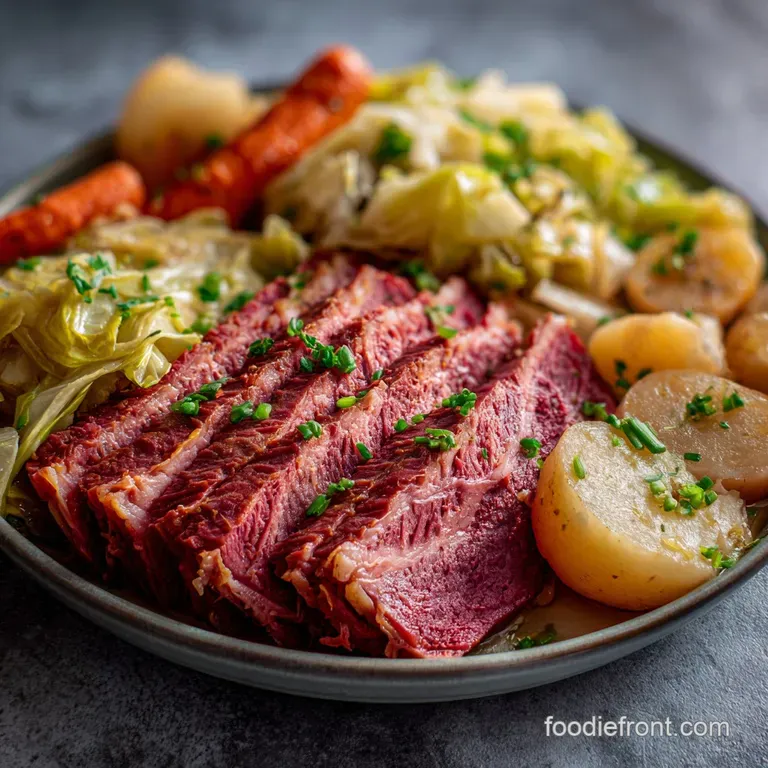
- Time: Active 20 minutes, Passive 4 hours, Total 4 hours 20 minutes
- Flavor/Texture Hook: Silky, salt cured beef with fall apart tender fibers
- Perfect for: St. Patrick’s Day celebrations or a comforting Sunday family dinner
- Mastering How to Cook Corned Beef
- Reasons This Method Always Delivers
- Essential Recipe Technical Specifications
- Building Your Brisket Flavor Profile
- Essential Tools For Tender Beef
- Step By Step Cooking Process
- Solving Common Brisket Cooking Problems
- Creative Ways To Change Flavors
- Handling Leftovers And Reheating Safely
- Best Ways To Serve Brisket
- Critical Sodium Level 🚨
- Recipe FAQs
- 📝 Recipe Card
Mastering How to Cook Corned Beef
The first time I tried to cook a corned beef brisket, I basically made a salt lick flavored rubber band. I remember standing in my kitchen, house smelling like vinegar and spices, feeling so defeated because the meat wouldn't even yield to a steak knife.
I realized then that you can't rush a brisket; it’s a stubborn cut that needs time, love, and the right liquid to surrender its toughness.
Now, every time that pot starts to hum on the stove, I get that specific aromatic hit of bay leaves and peppercorns. It’s the smell of anticipation. There is nothing like the moment you lift the lid and see that pink, cured meat resting in a pool of dark, Guinness infused broth, surrounded by vibrant carrots and soft potatoes.
It’s the ultimate comfort food that feels like a warm hug for the whole family.
We aren't just boiling meat here. We are performing a slow, steady transformation. By the time we’re done, that beef will be so tender it practically shatters when the fork hits it. If you’ve been intimidated by this cut before, don't worry.
I’ve made all the mistakes for you, and I’m going to walk you through exactly how to get it right every single time.
Reasons This Method Always Delivers
The Collagen Melt: Low heat over four hours slowly converts tough connective tissue into gelatin, creating a silky mouthfeel. This ensures your corned beef and cabbage recipe results in meat that isn't stringy or dry.
Osmotic Balance: Simmering the beef in a flavorful broth instead of plain water prevents the meat from losing all its seasoning to the liquid. This is why our Beef Italian Sausage recipe also relies on moisture rich environments to stay juicy.
Malt Interaction: The tannins and sugars in the Irish stout act as a secondary tenderizer while adding a deep, nutty complexity to the finish. This helps achieve that melt in your mouth corned beef recipe texture we all crave.
| Thickness | Internal Temp | Rest Time | Visual Cue |
|---|---|---|---|
| 2 inches | 190°F (88°C) | 15 minutes | Fork twists easily in meat |
| 3 inches | 195°F (90°C) | 20 minutes | Fat cap looks translucent |
| 4 inches | 200°F (93°C) | 25 minutes | Meat pulls apart with light pressure |
The temperature range is narrow because we want the collagen to fully dissolve without the muscle fibers becoming overly tight and dry. If you pull it too early, it stays rubbery; too late, and it turns into a pile of shreds.
That resting period is just as vital as the cook time, allowing the juices to settle back into the meat.
Essential Recipe Technical Specifications
The Physics of the Simmer
Low and steady heat is the secret to this melt in your mouth corned beef recipe. When liquid stays at a gentle bubble, the protein fibers relax rather than seize up. This prevents the beef from becoming a dry, grey block of salt.
| Ingredient | Science Role | Pro Secret |
|---|---|---|
| 4 lbs Brisket | Protein base | Choose a flat cut for even cooking and easier slicing. |
| 12 oz Irish Stout | Acidic tenderizer | The carbonation helps break down surface proteins faster. |
| 1 tbsp Peppercorns | Flavor infusion | Toast them in the dry pot for 1 minute for deeper spice notes. |
Using a heavy bottomed pot, like a Dutch oven, is a massive help because it holds heat so consistently. If the temperature fluctuates too much, you risk a "tough soft" uneven texture that’s really frustrating to eat.
Building Your Brisket Flavor Profile
The beauty of this dish is in the layers. You start with the cure from the meat itself, then add the bitterness of the stout and the sweetness of the root vegetables. If you’re looking for other ways to use beef with deep aromatics, my Beef Sirloin Dish recipe is a fantastic quicker alternative for busy nights.
- 4 lbs flat cut corned beef brisket with spice packet: Why this? The flat cut is leaner and easier to slice against the grain than the point.
- 12 oz Irish Stout (Guinness): Why this? Adds a rich, malty backbone that plain water lacks.
- 4 cups low sodium beef bone broth: Why this? Bone broth adds body and gelatinous texture to the final sauce.
- 1.5 lbs baby Yukon Gold potatoes: Why this? Their waxy texture keeps them from falling apart during the simmer.
- 1 small head green cabbage: Why this? Provides a crisp, peppery contrast to the rich beef.
| Original Ingredient | Substitute | Why It Works |
|---|---|---|
| Irish Stout | Apple Cider | Adds sweetness and acidity. Note: Result will be fruitier, less malty. |
| Yellow Onion | Leeks | Provides a gentler, more buttery onion flavor profile. |
| Beef Bone Broth | Chicken Broth | Lighter flavor. Note: Won't be as rich or dark as beef broth. |
Using low sodium broth is non negotiable here. The brisket is already heavily salted from the curing process, and as the liquid reduces, that salt becomes more concentrated. You want to control the seasoning, not be a victim of it.
Essential Tools For Tender Beef
To truly master how to cook corned beef, you need a large, heavy pot at least 6 liters. A Dutch oven is my go to because the heavy lid keeps all that fragrant steam trapped inside. You’ll also need a sharp chef's knife or a carving knife to get those clean, thin slices against the grain.
If you decide on a slow cooker corned beef and cabbage approach, ensure your crockpot is large enough to submerge the meat fully. For the stovetop, a pair of sturdy tongs is essential for flipping the 4 lbs brisket without splashing boiling, salty liquid all over your counter.
Chef's Tip: Use a wide, shallow bowl for the discarded fat and vegetable scraps while you prep. Keeping your workspace clear makes the four hour wait feel much shorter.
step-by-step Cooking Process
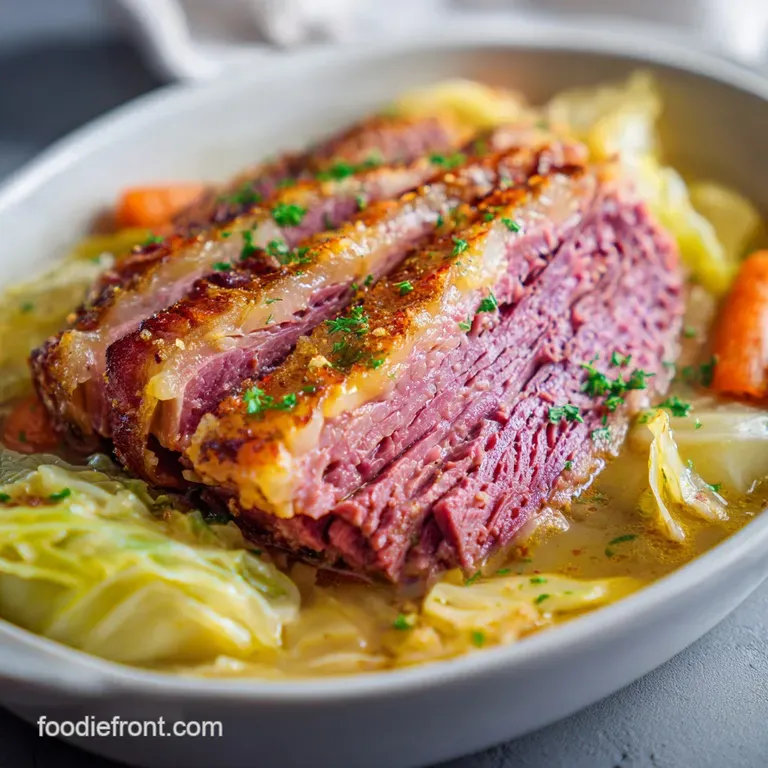
Rinsing The Excess Salt
Remove the 4 lbs flat cut corned beef from its packaging. Rinse it thoroughly under cold running water. Note: This removes excess surface brine so the dish isn't salt overloaded.
Establishing The Flavor Base
Place the brisket in a large Dutch oven. Add the quartered yellow onion, 4 cloves of smashed garlic, 1 tbsp black peppercorns, 2 bay leaves, and the contents of the spice packet. Note: Smashed garlic releases oils faster than whole cloves.
Adding The Liquids
Pour in the 12 oz Irish Stout and 4 cups of beef bone broth. If the meat isn't fully covered, add a little water until it is submerged by at least an inch. Note: The liquid level will drop slightly as it simmers.
Achieving The Perfect Simmer
Bring the pot to a boil over medium high heat, then immediately reduce to low. Cover the pot with a tight fitting lid and simmer for 3 hours. The liquid should barely bubble, not roll violently.
Preparing The Vegetables
While the meat simmers, peel the 4 large carrots and cut them into 2 inch chunks. Half the 1.5 lbs of Yukon Gold potatoes and cut the cabbage into 8 thick wedges.
Adding The Root Vegetables
After 3 hours, add the carrots and potatoes to the pot. Cook for 30 minutes until the potatoes just begin to soften when pierced with a fork.
Timing The Cabbage Wedges
Place the cabbage wedges on top of the meat and vegetables. Cover and cook for another 30 minutes until the cabbage is tender and bright green.
The Resting Phase
Transfer the brisket to a cutting board. Tent it loosely with foil and let it rest for 20 minutes. Note: This keeps the juices inside so the meat stays silky.
Carving The Brisket
Find the direction of the muscle fibers. Use a sharp knife to slice the beef against the grain into thin slices. Always slice opposite to the fiber lines for maximum tenderness.
Final Presentation
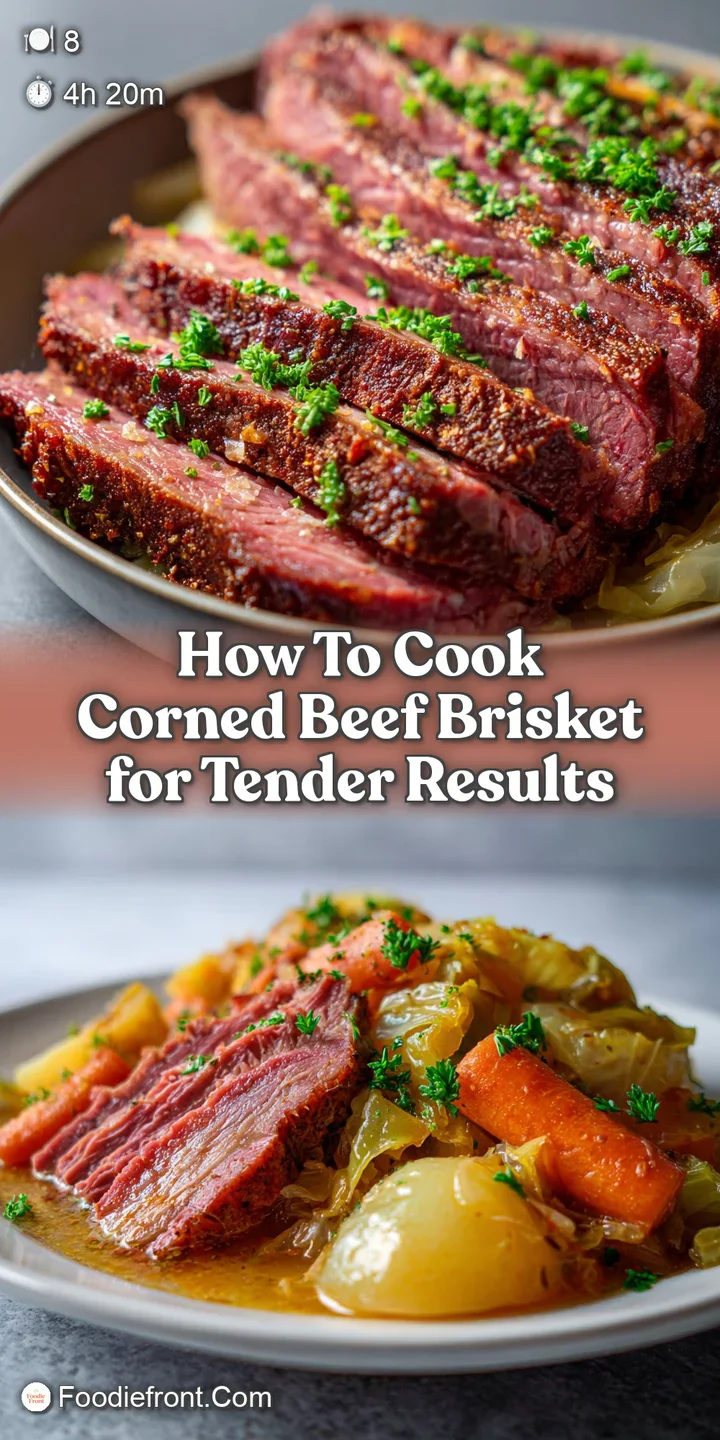
Arrange the sliced meat on a platter surrounded by the carrots, potatoes, and cabbage. Ladle a few spoonfuls of the hot cooking liquid over everything before serving.
Solving Common Brisket Cooking Problems
Fixing Salty Meat
If the brisket tastes like a salt mine, it’s usually because the rinsing step was skipped or the broth was too high in sodium. You can fix this by serving the meat with unsalted butter or a sweet honey mustard glaze to balance the palate.
Softening Tough Brisket
If your timer goes off and the meat is still chewy, it simply hasn't cooked long enough. Brisket doesn't get tough from overcooking (unless you run out of water); it gets tough from undercooking. Put the lid back on and give it another 30 minutes.
| Problem | Root Cause | Solution |
|---|---|---|
| Meat is stringy | Sliced with the grain | Find the fibers and rotate the meat 90 degrees before slicing. |
| Broth is cloudy | Boiled too hard | Keep the heat on the lowest possible simmer setting. |
| Veggies are mushy | Added too early | Follow the staggered timing: Meat first, then roots, then greens. |
Common Mistakes Checklist
- ✓ Forgot to rinse the meat (makes the broth incredibly salty)
- ✓ Boiled the meat too fast (causes the fibers to seize and toughen)
- ✓ Sliced with the grain (results in chewy, long fibers)
- ✓ Added cabbage at the start (it will turn into grey slime)
- ✓ Didn't use enough liquid (exposed meat dries out)
Creative Ways To Change Flavors
If you want to move away from the traditional stovetop corned beef, you can finish the meat in the oven. After simmering for 3 hours, pull the brisket out, rub it with a mix of brown sugar and grainy mustard, and roast at 200°C for 15 minutes to get a tacky, sweet crust.
Another great variation is a crockpot corned beef recipe. You just throw everything in (minus the cabbage) on low for 8-10 hours. Add the cabbage in the last hour. It's incredibly easy for work days. For a different beefy comfort meal, you might enjoy my Dinty Moore Beef Stew recipe which uses similar slow cooking principles.
- For a spicy kick: Add 1 tbsp of red pepper flakes and a halved jalapeño to the simmer.
- For a sweeter profile: Swap the stout for hard apple cider and add a sliced apple to the pot.
- For a smoky finish: Use a teaspoon of smoked paprika in the spice mix.
Handling Leftovers And Reheating Safely
Leftover corned beef is honestly a gift. It stays fresh in the fridge for about 4 days when kept in an airtight container with a little bit of the cooking liquid to keep it moist. If you have extra cabbage or potatoes, store them separately so they don't get too waterlogged.
For zero waste, save that flavorful broth! It makes an incredible base for a bean soup or for boiling more potatoes the next day. The leftover meat is destined for Reuben sandwiches or a classic corned beef hash with crispy fried eggs.
Freezing: You can freeze the cooked beef for up to 3 months. Slice it before freezing so you can grab just what you need. Thaw it overnight in the fridge before reheating.
Reheating: Avoid the microwave if you can; it turns the beef rubbery. Instead, place slices in a skillet with a splash of broth or water, cover, and steam on low heat until warmed through. This preserves that velvety texture we worked so hard to achieve.
Best Ways To Serve Brisket
When you’re ready to plate, don't just dump it all in a bowl. Presentation matters for family dinners! I like to put the sliced meat right down the center of a big wooden board or a wide platter, then nestle the potatoes and carrots around the edges. The cabbage wedges should go on last so they don't get buried.
Provide a small bowl of creamy horseradish sauce or a spicy Dijon mustard on the side. The sharp bite of horseradish is the perfect foil for the fatty, salty beef. A loaf of crusty Irish soda butter or some dark rye bread is also a must for mopping up that incredible Guinness infused broth.
Trust me, once you master how to cook corned beef this way, you'll never go back to the grey, flavorless versions. It’s all about that slow simmer and the malty broth. It takes a little patience, but the first bite of that tender, perfectly seasoned beef makes every minute worth it.
Right then, let's get that pot on the stove!
Critical Sodium Level 🚨
2140 mg 2140 mg (93% 93%)
The American Heart Association recommends limiting sodium intake to no more than 2,300mg per day for most adults. This recipe significantly exceeds that limit.
Tips to Reduce Sodium in Corned Beef and Cabbage
-
Dilute Broth-30%
The beef broth is a significant source of sodium. Use 2 cups of homemade or no-salt added beef broth and 2 cups of water to reduce the sodium content without sacrificing flavor.
-
Rinse Corned Beef-25%
Corned beef is cured in a salty brine. Thoroughly rinse the brisket under cold water before cooking to remove excess sodium from the surface.
-
Omit Spice Packet-20%
The spice packet included with the corned beef often contains a lot of salt. Consider omitting the packet altogether and rely on the other seasonings for flavor.
-
Consider Broth Only-15%
While Irish Stout adds flavor, consider omitting it and using only low-sodium beef broth, or even a combination of low-sodium beef broth and water, to lower the sodium levels.
-
Flavor with Herbs & Spices
Enhance the flavor of your dish with fresh or dried herbs and spices like thyme, rosemary, or smoked paprika. These additions will help make up for flavor lost with sodium reduction.
Recipe FAQs
What is the best way to cook corned beef?
Slow simmering is best. Submerge the brisket in a flavorful liquid, like beef broth mixed with Irish stout, and cook low and slow for 4+ hours until fork tender.
How long is corned beef supposed to be cooked?
Generally 3 to 5 hours, depending on size. Cook until the internal temperature reaches 190°F 200°F (88°C 93°C) and a fork twists easily into the meat.
What are the common mistakes in cooking corned beef?
The most common mistake is boiling it too hard or slicing incorrectly. Violent boiling toughens the meat fibers, and slicing against the grain is crucial for tenderness, as shown in our technique for achieving perfect texture in recipes like the Beef Sirloin Steak recipe.
Is it better to cook corned beef on the stove or slow cooker?
The stovetop (using a Dutch oven) offers better control over the simmer. A slow cooker is easier for hands off cooking, but maintaining a gentle, barely bubbling heat is easier to manage on the range top for optimal texture.
Should I rinse the corned beef before cooking?
Yes, definitely rinse the meat thoroughly under cold water. This removes excess surface curing salt and spices, preventing your final dish from becoming overwhelmingly salty once the cooking liquid reduces.
When should I add the cabbage to the cooking liquid?
Add the cabbage during the last 30 to 45 minutes of cooking. If added too early, the cabbage will overcook, turn grey, and break down into mush.
What is the correct internal temperature for pull apart tender corned beef?
Aim for 190°F to 200°F (88°C to 93°C). This temperature range ensures the tough connective tissues (collagen) have fully melted into gelatin, which is what creates that silky mouthfeel you want in braised beef.
Corned Beef Cooking Guide
Ingredients:
Instructions:
Nutrition Facts:
| Calories | 492 kcal |
|---|---|
| Protein | 33.8 g |
| Fat | 28.2 g |
| Carbs | 25.4 g |
| Fiber | 6.8 g |
| Sugar | 7.2 g |
| Sodium | 2140 mg |
