Juicy Smoked Turkey: Dry Brine Method
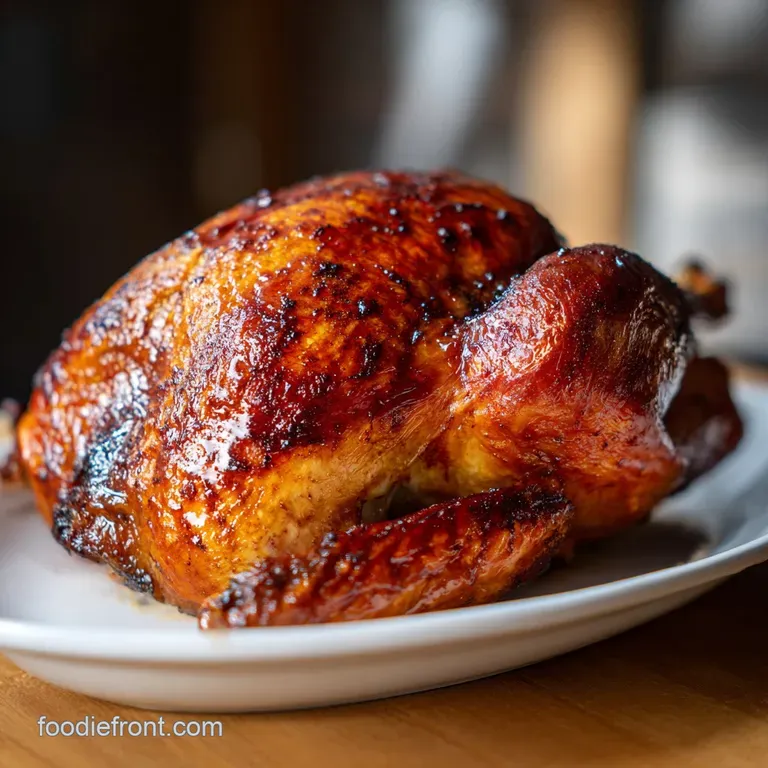
- Time: Active 30 minutes, Passive 3 hours 30 mins, Total 4 hours
- Flavor/Texture Hook: Smoky, salt kissed skin with a velvety, tender crumb
- Perfect for: Family holiday gatherings or a stress free Sunday feast
- Essential Smoked Turkey Recipe Specs
- Gathering Your Smoked Turkey Ingredients
- Minimal Tools for Smoking Success
- Cooking the Smoked Turkey Step-by-Step
- Fixing Common Smoked Turkey Errors
- Swaps for Your Smoked Turkey
- Storing and Reheating Your Turkey
- Serving Your Smoked Turkey Beautifully
- High in Sodium
- Recipe FAQs
- 📝 Recipe Card
Picture this: it's 6:00 AM on a chilly November morning, and the backyard is silent except for the faint click of the pellet grill igniting. I’m standing there in my slippers, clutching a mug of coffee, watching that first puff of blue smoke curl into the air.
There is something almost meditative about the scent of hickory and sage mingling in the cold air. For years, I was terrified of smoking a whole turkey I was convinced it would turn into a dry, leathery mess that would leave my family reaching for extra gravy just to choke it down.
But everything changed the year I stopped overcomplicating things. I realized that the best Smoked Turkey doesn't require a degree in thermodynamics or a thousand dollar offset smoker. It requires patience and a few clever shortcuts I’ve picked up along the way.
I remember one specific Thanksgiving when the oven heating element snapped ten minutes before the bird was supposed to go in. I had to pivot to the grill out of pure desperation, and honestly? It was the most successful mistake I’ve ever made. The family didn't just eat it; they practically fought over the skin.
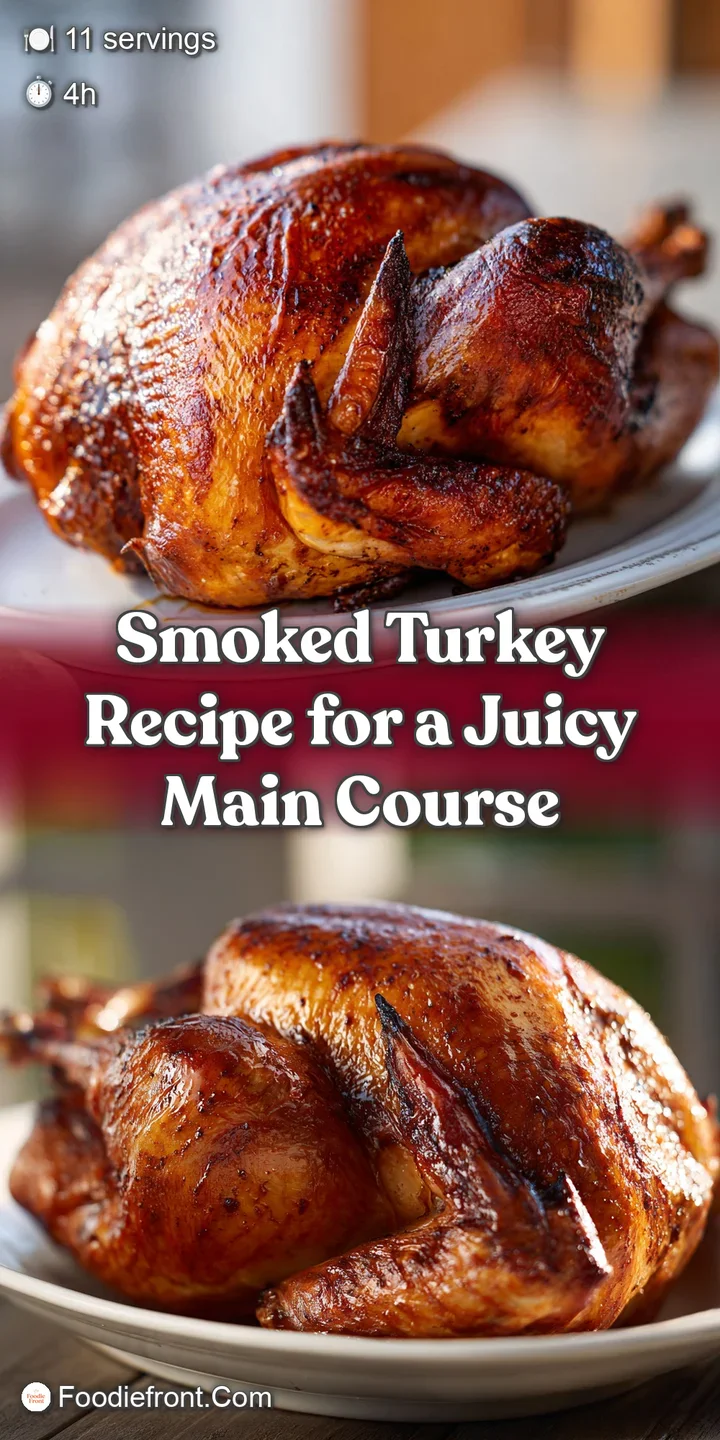
That "shatter" of the skin when you first slice into it is what we’re chasing today. We aren't just cooking meat; we're layering flavors. By the time we’re done, that 13 lb turkey is going to be a deep mahogany brown, smelling of garlic and rosemary, with meat so tender it almost falls off the bone.
I've made the mistakes so you don't have to, like the time I used too much sugar in my rub and the skin turned black before the meat was even warm. We’re going for a savory, herb forward profile that honors the bird without masking it.
Essential Smoked Turkey Recipe Specs
The Physics of the Crunch: Adding baking powder to the dry rub increases the skin's pH level, which speeds up the Maillard reaction and breaks down peptide bonds for a crispier texture.
This chemical shift allows the skin to brown and crisp at lower smoking temperatures that would usually leave it rubbery.
- Thermal Equilibrium: Spatchcocking or leveling the bird ensures heat hits the legs and breast simultaneously, preventing the lean breast from overcooking while the dark meat reaches its target.
- Convection Synergy: Using avocado oil provides a high smoke point fat layer that conducts heat directly into the skin, acting as a mini "fryer" while the wood smoke flavors the fat.
- Moisture Migration: The kosher salt in our dry brine draws moisture out of the skin, dissolves into a brine, and then is reabsorbed into the muscle fibers, seasoning the bird deeply to the bone.
- Smoke Absorption: Proteins absorb the most smoke flavor during the first 2 hours when the meat is cold; starting with a chilled bird helps develop that signature pink smoke ring.
| Thickness | Internal Temp | Rest Time | Visual Cue |
|---|---|---|---|
| 3-4 inch breast | 165°F | 20-30 mins | Juices run clear, skin is mahogany |
| 2 inch thigh | 175°F | 20-30 mins | Meat pulls easily from the bone |
| 1 inch wing | 180°F+ | 20-30 mins | Joint moves freely without resistance |
If you're prepping ahead, check out this Turkey Brine Recipe to guarantee the breast meat stays velvety through the entire smoke. While our dry brine today is powerful, a wet brine is a fantastic alternative if you have the fridge space and want that extra insurance policy against dryness.
Gathering Your Smoked Turkey Ingredients
| Ingredient | Science Role | Pro Secret |
|---|---|---|
| 3 tbsp Kosher salt | Denatures proteins to trap moisture | Use Diamond Crystal for better coverage without over salting |
| 1/2 tsp Baking powder | Adjusts pH for skin browning | Make sure it's fresh; old powder won't give you that shatter |
| 2 tbsp Avocado oil | Heat conductor and binder | Its high smoke point prevents the rub from tasting scorched |
| 1 tbsp Smoked paprika | Color agent and smoky depth | Provides that "fire roasted" look even in a clean burning smoker |
For the Bird
The foundation is our 13 lb whole turkey. I prefer fresh, but if you're using a frozen one, please give it at least 3 days in the fridge to thaw. A partially frozen bird is the fastest way to get uneven results and a raw center.
We also need 2 tbsp of avocado oil to help our rub stick and to fry that skin from the outside in.
The Failure Proof Dry Brine
This is where the magic happens. You’ll need 3 tbsp Kosher salt, 1 tbsp cracked black pepper, 1 tbsp smoked paprika, 1 tsp garlic powder, and 1 tsp dried sage. But the "hush hush" ingredient is 1/2 tsp of baking powder.
Why this? It creates tiny CO2 bubbles that increase surface area for maximum crispiness.
The Aromatic Baste
Towards the end, we’re going to hit it with a luxurious baste. Grab 1/2 cup unsalted butter, 2 sprigs of fresh rosemary (minced), and 3 cloves of garlic that you've grated into a paste.
Why this? Grating garlic releases more oils than chopping, creating a more intense flavor in the butter.
Minimal Tools for Smoking Success
You don't need a backyard full of gadgets, but a few basics make this Smoked Turkey experience much smoother. First, a reliable pellet grill or smoker is key. If you don't have one, a charcoal grill set up for indirect heat works too.
You’ll definitely want a meat thermometer this is the most important tool in your kitchen. Cooking by time is a guessing game; cooking by temperature is a science.
Chef's Note: I always keep a pair of heavy duty kitchen shears nearby. If you decide to spatchcock the bird (cutting out the backbone), shears make it a 2 minute job instead of a 10 minute struggle with a knife.
A large rimmed baking sheet with a wire cooling rack is another must have. This allows air to circulate under the turkey while it "dry brines" in the fridge, ensuring the skin on the bottom doesn't get soggy.
If you don't have a wire rack, you can prop the bird up on thick slices of onion or celery, which adds a nice aroma to the pan drippings too.
Cooking the Smoked Turkey step-by-step
- Thaw and Dry. Ensure your 13 lb turkey is completely thawed. Pat it dry with paper towels until the skin feels tacky, not slimy. Note: Surface moisture is the enemy of a crispy exterior.
- Apply Binder. Rub the 2 tbsp avocado oil all over the turkey, including under the skin of the breast where possible.
- Mix the Rub. Combine the 3 tbsp Kosher salt, 1 tbsp black pepper, 1 tbsp smoked paprika, 1 tsp garlic powder, 1 tsp dried sage, and 1/2 tsp baking powder in a small bowl.
- Season Heavily. Sprinkle the rub evenly over the bird. Note: Don't forget the cavity and the crevices under the wings.
- Chill Out. Place the turkey on a rack over a tray in the fridge for at least 4 hours (or up to 24). This "dry brine" period is non negotiable for skin texture.
- Preheat Smoker. Set your smoker to 225°F using fruitwood or hickory pellets. Wait until the smoke is thin and blue before putting the bird on.
- The Initial Smoke. Place the turkey breast side up on the grates. Smoke for about 2.5 hours until the internal temp reaches 110°F.
- The Temperature Pivot. Increase the smoker temp to 325°F. This higher heat is what renders the fat and crisps the skin.
- Prepare the Baste. Melt the 1/2 cup unsalted butter and stir in the 2 sprigs minced rosemary and 3 grated garlic cloves.
- Baste and Finish. Once the turkey hits 145°F, brush it generously with the garlic butter. Continue cooking until the breast hits 165°F and the skin is deep gold.
- The Crucial Rest. Remove from the heat and let it sit for at least 20 minutes. Note: This allows the velvety juices to redistribute so they don't pour out when you carve.
Fixing Common Smoked Turkey Errors
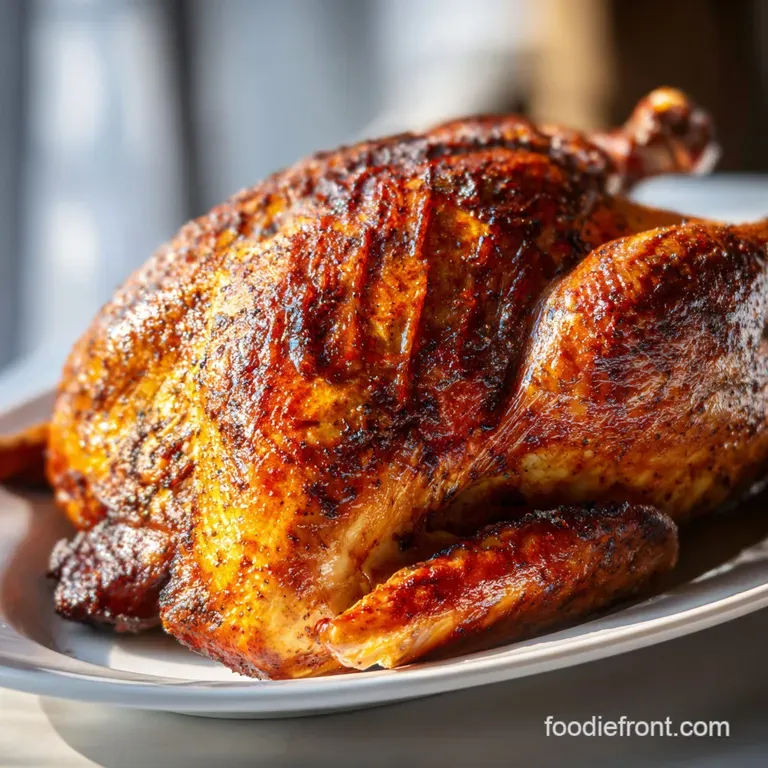
Why Your Turkey Skin Is Rubbery
This is the most common heartbreak in smoking a turkey. Usually, it happens because the temperature stayed too low for the entire cook. Smoke is great for flavor, but fat needs heat to render. If your skin is soft, it means the moisture trapped in the skin didn't evaporate.
What If the Wing Tips Start Burning?
Because the wings are thin, they cook much faster than the rest of the 13 lb bird. If you notice them getting too dark or looking charred, simply wrap the tips in a small piece of aluminum foil. This acts as a heat shield, allowing the rest of the turkey to catch up without sacrificing the wings.
| Problem | Root Cause | Solution |
|---|---|---|
| Meat is dry | Overcooked or skipped the rest | Pull at 160°F; carryover heat hits 165°F |
| Bitter flavor | "Dirty" white smoke | Ensure fire has enough oxygen for thin blue smoke |
| Rub didn't stick | Skin was too wet | Pat dry and use oil as a binder before seasoning |
Checklist for a Flawless Bird
- ✓ Leave the turkey uncovered in the fridge during the dry brine (this dehydrates the skin).
- ✓ Use a dual probe thermometer to monitor both the grill temp and the meat temp.
- ✓ Avoid opening the lid constantly "If you're lookin', you ain't cookin'."
- ✓ Always slice against the grain for the most tender bites.
- ✓ Keep the garlic butter warm so it doesn't seize up when you brush it on.
Swaps for Your Smoked Turkey
| Original Ingredient | Substitute | Why It Works |
|---|---|---|
| Avocado Oil | Ghee (Clarified Butter) | High smoke point with a rich, nutty flavor profile |
| Smoked Paprika | Chipotle Powder | Adds a significant spicy kick. Note: Use half the amount |
| Fresh Rosemary | Fresh Thyme | Similar earthy notes but slightly more floral and subtle |
If you find yourself with leftovers though with a 13 lb bird, they might disappear fast you can use the shredded meat in this Ground Turkey Stroganoff recipe as a smoky substitute for the ground meat. It adds a whole new dimension to the comfort dish!
Scaling for the Crowd
- For a 10 lb Bird: Reduce the cook time by about 45 minutes. Keep the rub quantities the same as you'll want that full coverage.
- For a 20 lb Bird: Do not double the salt! Increase it to 4.5 tbsp instead of 6. You may need to smoke in batches or spatchcock the bird to ensure it fits comfortably in your smoker.
- Small Portions: If you're only cooking for two, consider a Fried Turkey Breast recipe which takes significantly less time but still delivers on that crispy skin promise.
Storing and Reheating Your Turkey
Leftovers are arguably the best part of smoking a turkey. To store, carve the meat off the bone first. It stays much moister when stored as slices rather than as a whole carcass. Keep it in an airtight container in the fridge for up to 4 days.
For the zero waste enthusiasts, do not throw away the carcass. That smoked bone frame is liquid gold. Toss it into a large pot with some celery, carrots, and onions, cover with water, and simmer for 4 hours. You’ll have the most incredible smoky turkey stock for soups or risotto.
- Freezing: Wrap sliced meat tightly in plastic wrap, then place in a freezer bag. It stays fresh for up to 3 months.
- Reheating: To avoid the dreaded "rubber chicken" texture, place slices in a baking dish with a splash of broth. Cover tightly with foil and heat at 300°F (150°C) until just warmed through.
Serving Your Smoked Turkey Beautifully
The presentation is the victory lap. I love serving this on a big wooden board surrounded by charred lemon halves and fresh herb sprigs. It looks rustic, hearty, and much more inviting than a formal silver platter.
- If you want a glossy finish, give it one final brush of the rosemary garlic butter right before it hits the table.
- If you want a cleaner look, carve the breast meat entirely off the bone in one large piece, then slice it crosswise into uniform medallions.
- If you want a rustic feel, serve it "family style" with the drumsticks and wings arranged around the sliced breast meat, letting everyone grab their favorite piece.
Right then, you're ready to tackle the grill. Trust me on this: the first time you hear that skin crack under your knife, you’ll never go back to an oven-roasted bird again. Let's crack on and get that smoker preheated!
High in Sodium
1000 mg of sodium per serving (43% of daily value)
American Heart Association recommends limiting sodium intake to about 2,300mg per day.
Tips to Reduce Sodium in Your Turkey Recipe
-
Reduce Kosher Salt-25%
Kosher salt is a significant source of sodium in this recipe. Try reducing the amount from 3 tbsp to 1.5 tbsp. You can always add more to taste after cooking, but it's easier to start with less. Be sure to measure carefully.
-
Omit Baking Powder-5%
While a small amount, baking powder does contain sodium. Completely omit it from the recipe to eliminate that sodium source.
-
Use Unsalted Butter Mindfully
This recipe already calls for unsalted butter, which is great. However, ensure you are actually using unsalted butter to avoid added sodium. Double check the label.
-
Boost Flavor with Herbs & Spices
Enhance the flavor profile of your turkey using sodium free herbs and spices. Experiment with different combinations of fresh or dried herbs like thyme, oregano, or rosemary to create a delicious and flavorful dish.
Recipe FAQs
How long does it take to smoke a turkey?
Plan for approximately 4 hours total cooking time for a 13 lb bird. This includes about 2.5 hours at a low smoke temperature (225°F) and the remainder at a higher finishing temperature (325°F).
How long to smoke a 14-pound turkey at 250 degrees?
Estimate 3.5 to 4 hours, but rely solely on temperature, not time. Cook low and slow at 250°F until the breast hits 145°F, then potentially increase the heat to crisp the skin.
Can you smoke a 20 lb turkey at 225?
Yes, but consider spatchcocking the 20 lb bird first for even cooking. A larger turkey will require significantly more time, often needing 6-8 hours at 225°F, so monitor the internal temperature closely.
Is turkey good for smoking?
Absolutely, turkey is excellent for smoking, especially when using a dry brine to protect the lean breast meat from drying out.
What is the biggest mistake people make when smoking turkey?
The biggest error is pulling the turkey too early or not resting it long enough. Always pull the meat when the breast is 160°F to allow carryover cooking to bring it to a safe 165°F during the mandatory 20-minute rest.
What wood pellets work best for smoking turkey?
Hickory or fruitwoods like apple or cherry are ideal for poultry. These woods provide a balanced, sweet smoke that complements the poultry flavor without overpowering it, similar to the mild approach used in our Beef Italian Sausage recipe.
How do I ensure the smoked turkey skin gets crispy and not rubbery?
Dry the skin thoroughly, use a dry brine containing baking powder, and finish at a higher temperature. If you mastered the texture control in our dry brine process, apply the same principle of surface dehydration to your rubs for maximum crispness.
Smoked Turkey Recipe
Ingredients:
Instructions:
Nutrition Facts:
| Calories | 616 kcal |
|---|---|
| Protein | 76.5 g |
| Fat | 30.1 g |
| Carbs | 0.5 g |
| Fiber | 0.1 g |
| Sugar | 0 g |
| Sodium | 1000 mg |
