Egusi and Fufu: Authentic Nigerian Dinner
- Time: Active 20 minutes, Passive 50 minutes, Total 1 hour 10 mins
- Flavor/Texture Hook: Savory umami lumps in a velvety, spiced broth
- Perfect for: Sunday family dinners or an authentic cultural feast
- Authentic Nigerian Egusi and Fufu for Comforting Family Dinners
- Key Techniques for Perfecting the Classic Melon Seed Texture
- Recipe Specs for Planning Your Traditional Hearty Meal
- The Building Blocks of Flavor for Hearty African Stews
- Essential Kitchen Tools for Seamless Fufu and Soup Prep
- The Cooking Process for Velvety Stew and Smooth Fufu
- Pro Tips for Avoiding Common Pitfalls and Texture Issues
- Creative Ingredient Variations to Mix Up Your Weekly Menu
- Practical Storage Solutions and Creative Zero Waste Kitchen Tips
- Practical Scaling Advice for Different Group Sizes
- Authentic Flavor Myths and Kitchen Truths
- Beautiful Presentation Ideas for Your Authentic African Feast
- High in Sodium ⚠️
- Recipe FAQs
- 📝 Recipe Card
Authentic Nigerian Egusi and Fufu for Comforting Family Dinners
The second that red palm oil hits the hot pot, your whole kitchen transforms. There is this earthy, nutty aroma that starts to drift through the hallways, signaling to everyone in the house that a real meal is on the way.
I remember the first time I tried to get those elusive "lumps" in my egusi; I stirred way too much and ended up with a smooth, grainy porridge that tasted fine but lacked that bite. We want those beautiful, spongy clouds of melon seed that soak up the broth like little flavor sponges.
Cooking Egusi and Fufu is about more than just following steps; it is about the rhythm of the kitchen. You hear the rhythmic thwack thwack of the fufu being turned in the pot and the gentle sizzle of the peppers frying down into a concentrated paste.
It is a dish that demands your presence, but rewards you with a depth of flavor that feels like a warm hug. Honestly, don't even bother with the low-fat versions of anything here; the soul of this dish lives in the richness of the seeds and the oil.
Key Techniques for Perfecting the Classic Melon Seed Texture
We have all been there staring at a pot of watery soup wondering where it went wrong. The secret to a legendary bowl of Egusi and Fufu lies in how you treat those seeds before they even see the broth. If you just dump them in, they disappear.
We are going to treat them like a delicate custard, letting them set into firm, savory morsels that stand up to the heavy proteins like beef and tripe. It is a simple shift in technique that changes everything about the final mouthfeel.
The Physics of the Seed Cake
Protein Coagulation: The ground melon seeds act similarly to eggs; when mixed with a tiny bit of liquid and dropped into hot oil, the proteins bind together to form solids. This creates the signature "lumpy" texture that differentiates a high-quality stew from a simple sauce.
Chef's Tip: Before you start, toast your ground egusi seeds in a dry pan for 3 minutes until they smell like roasted peanuts. It adds a smoky dimension that makes the dish feel like it has been simmering for hours.
| Protein Cut | Prep Method | Visual Cue | Doneness Goal |
|---|---|---|---|
| Beef Chuck | 1 inch cubes | Deep brown sear | Tender to the fork |
| Tripe (Shaki) | Pre cleaned/Diced | Translucent edges | Chewy but not rubbery |
| Smoked Fish | Deboned/Flaked | Opaque flakes | Fully integrated |
When you are working with these proteins, remember that the tripe needs a head start. It is the marathon runner of the pot, requiring time to soften its tough fibers. If you throw the beef and tripe in at the same time without a pre boil, you'll end up with tender beef and shaki that feels like chewing on a rubber band.
Give that tripe the respect it deserves by letting it simmer until it yields easily to your teeth.
Recipe Specs for Planning Your Traditional Hearty Meal
Getting the proportions right is the difference between a stew that feels balanced and one that feels greasy. We are using 2 cups of ground egusi to 0.5 cup of red palm oil, which provides just enough fat to carry the heat of the scotch bonnets without leaving a heavy film on the roof of your mouth.
This recipe is designed to feed five hungry people, making it the centerpiece of your family table.
Component Analysis and Culinary Function
| Ingredient | Science Role | Pro Secret |
|---|---|---|
| Ground Egusi | Thickening Agent | Use a "paste" method for bigger lumps |
| Red Palm Oil | Fat Emulsifier | Never bleach the oil; keep it vibrant orange |
| Ground Crayfish | Umami Powerhouse | Buy whole dried crayfish and grind them fresh |
| Cassava Flour | Starch Structure | Add flour gradually to prevent dry pockets |
The interaction between the palm oil and the blended peppers is where the magic happens. The oil doesn't just provide fat; it carries the fat soluble flavor compounds from the peppers and crayfish throughout the entire dish.
Without that specific oil, the flavor profile falls flat, losing that characteristic earthy tang that defines West African soul food.
The Building Blocks of Flavor for Hearty African Stews
You need high-quality components to make this work. While you can find ground egusi at most international markets, I always suggest checking the freshness. If the seeds smell dusty or bitter, your soup will carry that note. Look for seeds that are cream colored and have a mild, nutty scent.
For the Savory Base (Protein)
- 1 lb beef chuck, cut into 1 inch cubes Why this? High fat content stays juicy during the long simmer.
- 0.5 lb tripe (shaki), pre cleaned and diced Why this? Adds essential chew and authentic texture.
- 1 medium smoked fish, deboned and flaked Why this? Provides a deep, smoky undertone to the broth.
- 1 tsp salt
- 2 bouillon cubes
For the Egusi "Cake"
- 2 cups ground egusi (melon seeds)
- 1 small onion, finely grated Why this? The sulfur in onions helps bind the seed paste.
- 0.25 cup water (for egusi paste)
- 2 tbsp ground crayfish
For the Stew & Greens
- 0.5 cup red palm oil
- 2 red bell peppers, blended
- 2 scotch bonnet peppers, blended
- 2 cups fresh spinach, roughly chopped
For the Fufu
- 3 cups cassava flour
- 5 cups water (for fufu)
| Original Ingredient | Substitute | Why It Works |
|---|---|---|
| Red Palm Oil | Vegetable oil + 1 tsp Smoked Paprika | Mimics the color and adds some smokiness. Note: Lacks the authentic earthy depth. |
| Cassava Flour | Potato Starch/Flakes | Creates a similar stretchy, starchy texture for the swallow. |
| Ground Egusi | Raw Pumpkin Seeds (Pepitas) | Similar fat and protein profile. Note: Flavor is slightly more "green" and less nutty. |
If you are new to scotch bonnets, start with one. These little peppers pack a punch that can quickly overwhelm the palate. However, don't skip them entirely; the heat is necessary to cut through the richness of the melon seeds and the palm oil. It is all about that beautiful, spicy balance.
Essential Kitchen Tools for Seamless Fufu and Soup Prep
You don't need a high end kitchen to make a stellar Egusi and Fufu, but a few choice tools will make your life much easier. A heavy bottomed pot, like a cast iron Dutch oven, is your best friend here.
It holds heat evenly, which is crucial when you are trying to "set" the egusi lumps without burning the bottom of the stew.
For the fufu, a sturdy wooden spoon (often called an omorogun) is non negotiable. You are going to be doing some serious stirring almost like you're kneading dough in a pot. A flimsy plastic spoon will snap under the pressure of the thickening starch.
If you have a high speed blender for the peppers, that's great, but even a food processor works if you prefer a slightly chunkier texture in your vegetable base.
The Cooking Process for Velvety Stew and Smooth Fufu
1. The Braise and Broth
Place the beef chuck and tripe in a large pot with salt and bouillon cubes. Cover with just enough water to submerge the meat and simmer for 30 minutes until the tripe is tender. Don't throw away that liquid; that's liquid gold broth we'll use later.
2. Creating the Flavor Base
In a separate wide pot, heat the 0.5 cup palm oil on medium for 2 mins. Add the blended bell peppers and scotch bonnets. Fry this mixture for 10 minutes until the oil begins to separate and float on top of the pepper base.
3. The "Lumping" Phase
Mix your 2 cups of ground egusi with the grated onion and 0.25 cup water to form a thick, gritty paste. Scoop small spoonfuls of this paste into the frying pepper sauce. Do not stir! Cover the pot and let it steam for 5 minutes until the lumps feel firm to the touch.
4. Integration and Finishing
Gently pour in the meat, tripe, and the reserved broth. Add the flaked smoked fish and 2 tbsp ground crayfish. Stir very carefully to avoid breaking the egusi lumps. Simmer for 15 minutes until the sauce thickens and glows with a deep orange hue. Fold in the spinach at the very end.
5. Pounding the Fufu
Bring 5 cups of water to a boil in a clean pot. Reduce heat to medium low and gradually whisk in the 3 cups of cassava flour. Stir vigorously with your wooden spoon, pressing the dough against the sides of the pot to remove lumps.
Continue this "pounding" motion for 8 minutes until the fufu is stretchy and translucent.
Chef's Note: If the fufu feels too stiff, add a splash of hot water, cover for a minute to steam, and then continue stirring. It should be smooth like playdough but much more elastic.
Pro Tips for Avoiding Common Pitfalls and Texture Issues
The biggest mistake people make is impatience. If you stir the egusi paste as soon as it hits the oil, you will break the protein bonds, and you'll never get those chunks. It is a test of will, but leave that spoon alone! Also, let's talk about the fufu.
If you don't work quickly once the flour hits the water, you'll end up with "islands" of dry flour that are nearly impossible to get out later.
Solving Grainy Texture Issues
If your soup feels too grainy or the oil isn't integrating, it's usually because the peppers weren't fried long enough. The frying process (called "sealing" in some kitchens) breaks down the cell walls of the peppers, allowing them to emulsify with the palm oil.
If it looks "separated" in an unappealing way, keep simmering on low heat.
Techniques for Smooth Fufu
Lumpy fufu is the enemy of a good meal. The key is the initial whisking. Use a whisk for the first 30 seconds as you add the flour, then switch to the wooden spoon once it becomes too thick to move. This ensures every grain of flour is hydrated before the starch begins to gelatinize.
| Problem | Root Cause | Solution |
|---|---|---|
| Watery Stew | Too much broth added too early | Simmer uncovered for 10 mins to reduce liquid |
| Bitter Aftertaste | Burned palm oil or old seeds | Add a pinch more salt/crayfish to balance; don't overheat oil |
| Lumpy Fufu | Adding flour too quickly to boiling water | Sift flour in and stir constantly with a heavy spoon |
Common Mistakes Checklist
- ✓ Pat your beef dry before boiling if you want a better flavor profile.
- ✓ Do not "bleach" the palm oil (heating until clear); you lose the nutrients and the flavor.
- ✓ Keep the heat at medium low when steaming the egusi paste to prevent scorching.
- ✓ Use a heavy wooden spoon for the fufu the resistance is real.
- ✓ Always de bone the smoked fish thoroughly; nobody wants a surprise bone in their swallow.
Creative Ingredient Variations to Mix Up Your Weekly Menu
One of the best things about this dish is how adaptable it is. In my house, we sometimes swap the spinach for bitter leaf or pumpkin leaves (ugwu) if we can find them at the market. Each leaf brings a different personality to the pot.
Bitter leaf adds a sophisticated, medicinal tang that cuts through the fat beautifully, while spinach keeps things mild and silky.
The Vegan Twist
You can absolutely make a killer vegan version of this. Swap the beef and tripe for thick chunks of roasted mushrooms and fried tofu. Use a high-quality vegetable bouillon and double the amount of ground crayfish or use fermented locust beans (iru) if you want to keep it strictly plant based but keep that deep, funky umami.
Keto Friendly Swap
If you are watching your carbs, fufu can be a challenge. I have seen friends make "cauliflower fufu" by blending steamed cauliflower with a bit of psyllium husk for stretch. It isn't exactly the same, but when it's dipped into that rich egusi soup, you hardly notice the difference.
You get all the flavor of the stew without the heavy starch hit.
| Method | Time | Texture | Best For |
|---|---|---|---|
| Traditional Stovetop | 70 mins | Complex & Lumpy | Weekend family feasts |
| Pressure Cooker (Meat only) | 45 mins | Ultra tender meat | Busy weeknight prep |
| Slow Cooker | 6 hours | Deeply integrated flavors | Set and forget meals |
If you go the slow cooker route, only add the egusi and spinach in the last hour. If the seeds cook for six hours, they lose their structural integrity and turn the soup into a thick, uniform paste rather than the lumpy delight we are after.
Practical Storage Solutions and Creative Zero Waste Kitchen Tips
Egusi and Fufu is actually one of those rare dishes that tastes even better the next day. As it sits in the fridge, the spices settle, and the melon seeds continue to absorb the savory broth. It will thicken significantly as it cools, so don't be alarmed if it looks like a solid block the next morning.
Storage: Keep the stew in an airtight container in the fridge for up to 4 days. You can freeze it for up to 3 months, though the greens might lose some of their vibrant color. For the fufu, wrap individual portions tightly in plastic wrap while they are still warm to prevent a hard crust from forming.
These will stay fresh in the fridge for 2 days.
Zero Waste: Don't toss those spinach stems! Finely chop them and sauté them with onions for a quick breakfast scramble. If you have leftover broth from boiling the meat, use it as a base for a quick noodle soup or freeze it in ice cube trays to add an umami boost to your next stir fry.
Even the bones from the smoked fish (if you didn't flake them in) can be simmered one last time to make a quick seafood stock.
Practical Scaling Advice for Different Group Sizes
Scaling this recipe is fairly straightforward, but there are a few "rules of thumb" to keep the balance right. If you are doubling the recipe for a party, you don't actually need to double the palm oil. Use about 1.5 times the amount (0.75 cup) to avoid the stew becoming overly greasy.
The seeds provide plenty of their own natural oils as they cook down.
When halving the recipe, be careful with the scotch bonnets. One pepper in a half batch is much more potent than two peppers in a full batch. For the fufu, scaling down is easy, but scaling up requires some muscle. If you are making fufu for ten people, I highly recommend making it in two separate batches.
Stirring 6 cups of flour at once is a workout that even the strongest home cook might find daunting!
Authentic Flavor Myths and Kitchen Truths
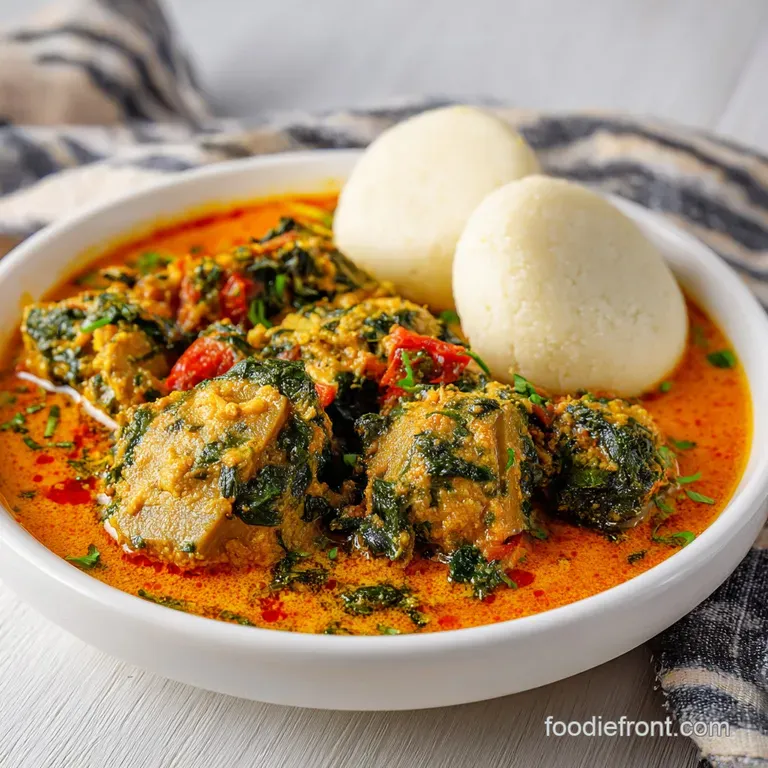
There is a common misconception that you must "bleach" palm oil until it is clear to remove the "smell." This is a myth that actually strips the oil of its characteristic flavor and beta carotene. Authentic Egusi should have that bright, sunset orange hue.
The "smell" people refer to is often just the earthy aroma of the oil, which mellows out perfectly once the peppers and onions are fried into it.
Another myth is that you can't make good fufu without a mortar and pestle. While traditional "pounding" is a beautiful ritual, the stovetop method we used here using a wooden spoon to beat the dough against the pot creates a texture that is 95% identical.
It’s all about the heat and the mechanical action of stretching the starch. Don't feel like your meal is "less than" just because you didn't spend an hour with a giant wooden pole!
Beautiful Presentation Ideas for Your Authentic African Feast
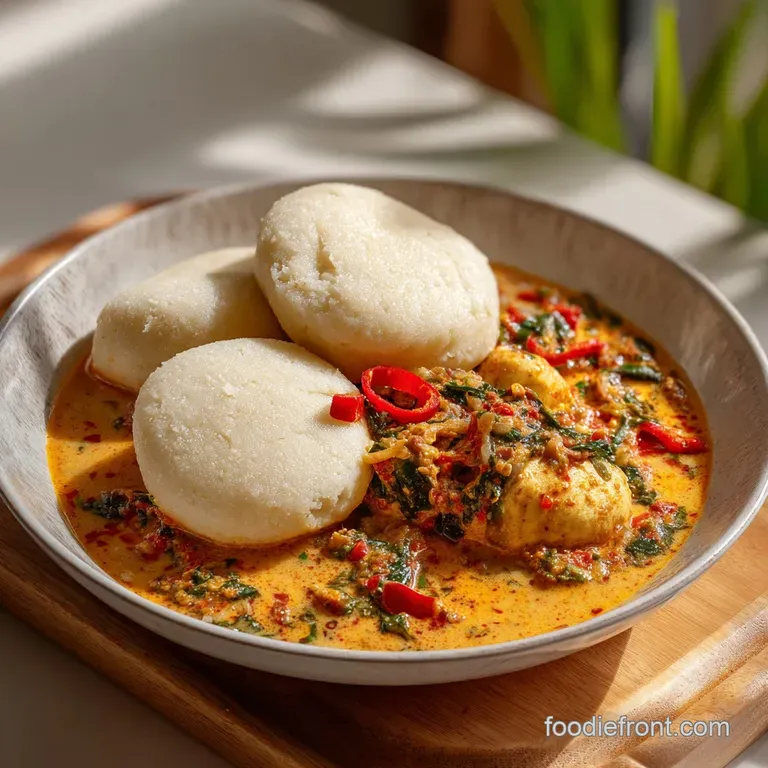
When you are ready to serve, don't just dump the fufu on a plate. Wet your hands slightly and roll the warm fufu into smooth, gleaming balls. Place one in a shallow bowl and ladel the vibrant Egusi stew right next to it. The contrast between the snowy white fufu and the deep orange, green flecked soup is stunning.
For a family style look, serve the stew in a large central clay pot. Garnish the top with a few extra flakes of smoked fish or a drizzle of fresh palm oil for a glossy finish. Encourage everyone to wash their hands and eat traditionally using the fufu as a scoop for that glorious, lumpy stew.
It is a communal experience that makes the food taste a hundred times better than if you ate it with a spoon. Trust me, once you master that fufu scoop technique, there is no going back!

High in Sodium ⚠️
812 mg 812mg of sodium per serving (35% 35% of daily value)
The American Heart Association recommends limiting sodium intake to about 2,300mg per day.
Tips to Reduce Sodium in Your Egusi Soup:
-
Eliminate Bouillon Cubes-30%
Bouillon cubes are very high in sodium. Removing the 2 bouillon cubes can significantly lower the sodium content of your soup. Try using homemade stock instead.
-
Reduce Smoked Fish Sodium-20%
Smoked fish contributes to the overall sodium content. Soak the smoked fish in water for 30 minutes before adding it to the soup to reduce its saltiness, or use a fresh fish instead.
-
Reduce Added Salt-25%
Cut back on the amount of salt you add. Try reducing the salt by half (0.5 tsp) and adjusting to taste after cooking. Consider adding a pinch at the end if needed.
-
Spice It Up!
Enhance the flavor with sodium free spices and herbs. Add extra ground crayfish, bell peppers, and scotch bonnet peppers for a flavorful kick without the added sodium.
Recipe FAQs
What is egusi and fufu?
Egusi is a rich, savory stew made primarily from ground melon seeds, palm oil, and blended peppers, often containing meat or fish. Fufu is the accompanying starchy "swallow" made from cassava flour, used to scoop and eat the stew.
What does egusi taste like?
It tastes deeply savory and earthy, with a pronounced nutty undertone from the melon seeds. The overall profile is rich due to the palm oil, balanced by the heat of chili peppers and the umami from crayfish.
What is an egusi stew made of?
The core ingredients are ground melon seeds (egusi), red palm oil, blended peppers (like bell and scotch bonnet), onions, and often smoked fish or beef.
Is egusi and fufu healthy?
Yes, it offers significant nutritional value, though it is high in natural fats and carbohydrates. Melon seeds are rich in protein and healthy fats, while the stew contains numerous vitamins from the leafy greens added.
How do I achieve the signature "lumpy" texture in my egusi stew?
Mix the ground egusi with a little water and onion into a paste, then drop spoonfuls directly into the hot, frying pepper base without stirring immediately. Let the lumps set via steam before adding liquid.
Can I substitute red palm oil in egusi stew?
You can substitute it, but the authentic flavor will suffer. Vegetable oil can work in a pinch, but you must add smoked paprika or tomato paste to mimic the color and earthy depth lost by omitting palm oil.
How do I stop my fufu from becoming lumpy while mixing?
Add the cassava flour very slowly into the boiling water while whisking vigorously to ensure no dry pockets form. Switch to a sturdy wooden spoon once the mixture becomes too thick for the whisk.
Egusi And Fufu Recipe
Ingredients:
Instructions:
Nutrition Facts:
| Calories | 1153 kcal |
|---|---|
| Protein | 55.6 g |
| Fat | 67.5 g |
| Carbs | 78.6 g |
| Fiber | 5.4 g |
| Sugar | 5.8 g |
| Sodium | 812 mg |
