Easy One Pot Chicken and Rice Recipe
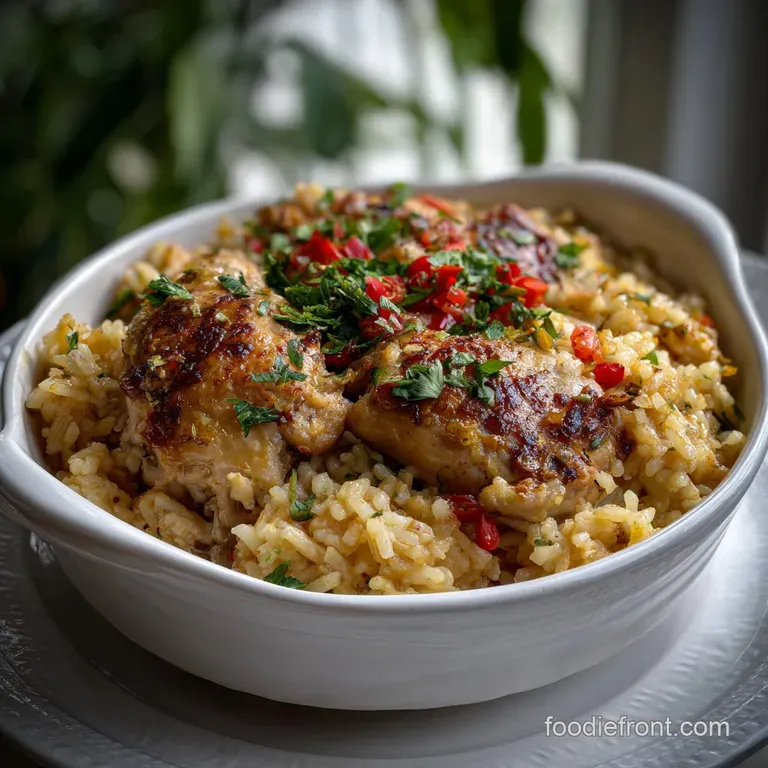
- Effort/Time: 40 minutes total (15 minutes active)
- Flavor Hook: Smoked paprika and toasted rice create a savory, sun-drenched profile.
- Perfect for: Busy weeknights when you need high-protein comfort without the cleanup.
- The Comfort of a One-Pan Family Classic
- The Science of Flavor Saturation and Grain Texture
- Precision Metrics for a Reliable Family Dinner
- The Elements of Hearty Comfort: Choosing Your Components
- Minimalist Essentials for Maximum Efficiency
- The Strategic Assembly of Protein and Grains
- Common Pitfalls and Solutions for Fluffy Grains
- Flavor Architecture: Adaptations for Global Profiles
- ⚗️ The Scaling Lab: The Physics of Quantity
- Preserving Texture: Cooling and Reheating Protocols
- Finishing Touches for a Hearty Family Meal
- Recipe FAQs
- 📝 Recipe Card
The Comfort of a One-Pan Family Classic
There is nothing more frustrating than spending forty minutes on a meal only to pull the lid off and find a swamp of gummy rice and rubbery meat. I’ve seen home cooks throw away entire pots of food because the rice was simultaneously crunchy in the center and mushy on the outside.
It’s a waste of good ingredients and, frankly, a blow to your confidence when the family is waiting at the table. Getting this easy one pot chicken and rice right requires precision, but the payoff is worth the effort.
I’ll admit, I used to be the "guess and check" cook who just poured broth until it "looked right." I destroyed at least a dozen dinners before I sat down to actually measure the evaporation rates and thermal retention of my pans.
I realized that an easy one pot chicken and rice isn't just about throwing things in a pot; it’s about managing moisture and heat like a laboratory experiment that happens to taste like home.
The secret to success here is the "Toasting Phase," where we use the Maillard reaction to deepen the chicken’s flavor and then coat the rice grains in fat. This creates a physical barrier that prevents the starches from blowing out and becoming sticky.
You end up with a mahogany colored sear on the chicken and grains of rice that stay distinct, velvety, and infused with savory broth, which is the hallmark of a great easy one pot chicken and rice.
The Science of Flavor Saturation and Grain Texture
- Maillard Reaction: Searing the chicken at high heat creates new flavor compounds (melanoidins) that dissolve into the rice during the simmer.
- Starch Gelatinization Control: Rinsing the rice removes excess surface amylopectin, ensuring the grains remain separate rather than clumping into a paste.
- Lipid Enrobing: Sautéing the dry rice in olive oil and chicken fat coats each grain, slowing down water absorption for a firm, "al dente" bite.
- Acidic Brightening: Adding 1/2 lemon, juiced at the finish, breaks through the heavy fats and proteins by exciting the sour sensing taste buds.
Precision Metrics for a Reliable Family Dinner
| Metric | Measurement | Checkpoint |
|---|---|---|
| Total Prep Time | 15 minutes | All aromatics diced and chicken cubed to 1 inch. |
| Total Cook Time | 25 minutes | Includes 15 minute simmer and 5 minute rest. |
| Target Internal Temp | 165°F | Chicken is safe, juicy, and opaque throughout. |
| Liquid Ratio | 1.83:1 | 2.75 cups broth to 1.5 cups rice for optimal hydration. |
The Elements of Hearty Comfort: Choosing Your Components
When we talk about an easy one pot chicken and rice, the quality of your base defines the final depth. I always reach for Diamond Crystal Kosher Salt because its hollow flakes dissolve instantly into the meat, and Bertolli Extra Virgin Olive Oil for its high-quality fat profile.
- 1.5 lbs chicken breast: Cut into 1 inch pieces. Why this? Lean protein cooks quickly and absorbs the smoked paprika seasoning evenly.
- 1.5 cups long grain white rice: Rinsed until water runs clear. Why this? High amylose content ensures grains stay fluffy and distinct after simmering.
- 2.75 cups Swanson Low-Sodium Chicken Broth: The primary hydration source. Why this? Allows you to control salt levels without over seasoning the delicate rice.
- 1 medium yellow onion: Finely diced for even melting.
- 3 cloves garlic: Minced to release allicin for pungent depth.
- 1 tsp smoked paprika: Provides a wood fired aroma without a grill.
- 1 tsp dried oregano: Adds an earthy, floral note that complements the poultry.
- 1/2 cup frozen peas: Added at the end to preserve vibrant green color.
- 1 tbsp unsalted butter: Swirled in at the finish for a glossy, rich mouthfeel.
- 2 tbsp fresh parsley: Chopped for a hit of grassy freshness.
- 1/2 lemon, juiced: The essential "brightener" for the heavy starches.
Ingredient Chemistry Breakdown
| Ingredient | Chemical/Physical Role (Science) | The Pro Secret (Why This Matters) |
|---|---|---|
| Long grain Rice | Starch gelatinization at 150°F+ | Rinsing prevents a "porridge" texture by removing loose surface starch. |
| Lemon Juice | pH adjustment and flavor bridging | Acid denatures any lingering "heavy" fats, making the dish feel lighter. |
| Smoked Paprika | Oil-soluble carotenoids | Sautéing the spice in oil (blooming) releases fat-soluble flavor molecules. |
Minimalist Essentials for Maximum Efficiency
You don't need a kitchen full of gadgets for an easy one pot chicken and rice, but the right vessel is non-negotiable. I recommend a Lodge 6 Quart Enameled Cast Iron Dutch Oven.
The thick walls provide "thermal mass," which means the temperature doesn't drop when you add the cold chicken. This prevents the meat from steaming in its own juices.
You will also need a heavy duty wooden spoon (to scrape up the "fond" or browned bits) and a fine mesh strainer for the rice. If you use a thin bottomed stainless steel pot, you risk scorching the rice at the center before the edges are cooked.
If you're in a pinch, a Le Creuset Braiser works exceptionally well because the wide surface area promotes even evaporation.
The Strategic Assembly of Protein and Grains
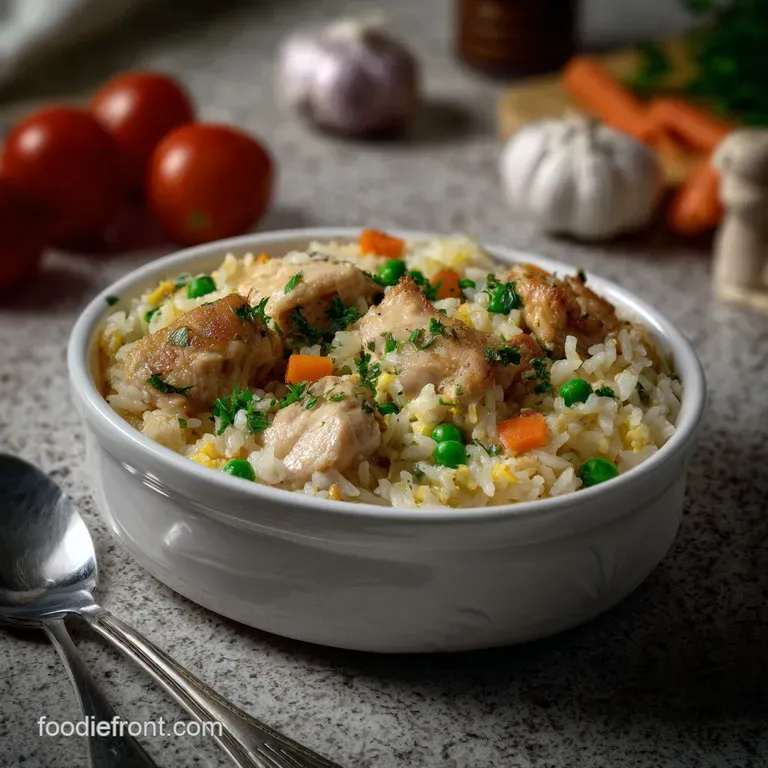
Chef's Tip: Freeze your butter for 10 minutes before the final "fluffing" step. Grating the cold butter into the hot rice allows it to emulsify into the remaining moisture rather than just melting into a greasy puddle.
- Pat chicken dry with paper towels. Note: Removing surface moisture allows for an immediate sear rather than steaming.
- Season chicken with salt, pepper, and 1 tsp smoked paprika. Note: Spices adhere better to the protein when applied directly before hitting the oil.
- Heat 2 tbsp EVOO in your Dutch oven over medium high heat until oil shimmers and a faint wisp of smoke appears.
- Sear chicken pieces for 5 minutes until a mahogany crust forms and meat releases easily from the pan.
- Remove chicken to a plate, leaving the fat in the pot. Note: We will finish cooking the chicken in the rice to preserve its juices.
- Sauté onion for 4 minutes until edges are translucent and the pungent aroma turns sweet.
- Add minced garlic and 1 tsp oregano, stirring for 1 minute until the kitchen smells intensely fragrant but garlic is not browned.
- Stir in 1.5 cups rinsed rice and toast for 2 minutes until the tips of the grains look chalky and smell nutty.
- Pour in 2.75 cups chicken broth, scraping the bottom of the pan to release the savory browned bits.
- Return chicken and juices to the pot.
- Bring to a boil, then reduce heat to low and cover tightly.
- Simmer for 15 minutes until all liquid is absorbed and small "steam vents" appear on the rice surface.
- Stir in 1/2 cup frozen peas and 1 tbsp butter; cover and let sit off the heat for 5 minutes until peas are bright green and rice is tender.
- Add lemon juice and parsley, then fluff with a fork until grains are separated and glossy.
Common Pitfalls and Solutions for Fluffy Grains
Why Your Rice is Gummy or Mushy
This usually happens because of "starch agitation." If you stir the rice while it’s simmering, you break the grains and release starch into the liquid, creating a glue like consistency. Plus,, skipping the rinse step leaves too much amylopectin on the surface.
Developing a successful easy one pot chicken and rice hinges on avoiding this agitation.
| Problem | Root Cause | The Fix | Pro Protocol |
|---|---|---|---|
| Gummy Texture | Excessive surface starch | Rinse rice 3+ times | Use a fine mesh sieve until water is crystal clear. |
| Crunchy Center | Evaporation was too fast | Tighten the lid seal | Place a sheet of foil under the lid to lock in steam. |
| Scorched Bottom | Heat was too high | Use a "tamer" or lower flame | Move the pot to the smallest burner for the simmer phase. |
Why Your Chicken is Dry
Chicken breast denatures and loses moisture rapidly once it passes 165°F. Because we sear it first and then simmer it, there’s a risk of overcooking. The solution is cutting the pieces into uniform 1 inch cubes; this ensures they reach safety exactly as the rice reaches hydration.
This controlled cooking environment is key to making this easy one pot chicken and rice recipe consistently moist.
Flavor Architecture: Adaptations for Global Profiles
While the base easy one pot chicken and rice is a classic, the physics of the dish allow for easy swaps. If you change the rice type, you must change the liquid. For example, brown rice requires 1 cup more broth and an extra 20 minutes of simmering.
Ingredient Swap Table
| Original Ingredient | Substitute | Why It Works |
|---|---|---|
| Chicken Breast | Boneless Thighs | Higher fat content; more forgiving if overcooked. |
| Frozen Peas | Chopped Spinach | Wilts instantly in residual heat; adds iron and fiber. |
| Smoked Paprika | Curry Powder | Transforms the profile into a "Quick Biryani" style meal. |
Decision Shortcut
- If you want a crispier bottom (Socarrat): Increase heat to medium for the last 2 minutes of cooking until you hear a crackling sound.
- If you want a creamier finish: Double the butter and add 1/4 cup grated Parmesan cheese during the final fluffing.
- If you want it spicy: Add 1/2 tsp crushed red pepper flakes during the garlic sauté phase.
⚗️ The Scaling Lab: The Physics of Quantity
When you decide to double this easy one pot chicken and rice for a larger family dinner, you cannot simply double every ingredient. The Square Cube Law dictates that your volume increases much faster than the surface area of your pot.
- The Evaporation Paradox: Because the surface area of your Dutch oven stays the same but the liquid volume doubles, less steam escapes. Reduce the total broth by 15% (use 4.5 cups instead of 5.5 cups) to prevent soggy rice.
- Pan Crowding (Maillard Killer): If you throw 3 lbs of chicken into one pot, the temperature will plummet. This causes the chicken to release water and "boil" rather than sear. Mandatory instruction: Sear the chicken in two separate batches to maintain a pan temp above 300°F.
- Thermal Mass Carry Over: A larger pot of rice holds significantly more heat energy. Pull the pot off the stove 3 minutes earlier than a single batch, as the internal steam will continue to cook the grains long after the flame is out.
Preserving Texture: Cooling and Reheating Protocols
- Storage
- This meal keeps beautifully in the fridge for up to 4 days. Store it in an airtight glass container to prevent the rice from absorbing "fridge smells."
- Fridge Life
- 4 days.
- Freezer Life
- 2 months (Note: Rice texture may become slightly softer upon thawing).
Reheating: Rice dries out in the microwave. To fix this, add 1 tbsp of water or broth per cup of rice, cover with a damp paper towel, and heat on medium power. This creates a mini steam chamber that re-hydrates the starches.
Zero Waste Philosophy: Lemon Peels?Transform: Toss the spent lemon halves into a jar of white vinegar. Science: The citric acid and oils create a natural degreaser for your stovetop.
Parsley Stems?Transform: Finely mince them and add them at the same time as the garlic. Science: Stems hold more essential oils and "crunch" than leaves, providing a concentrated herb flavor.
Finishing Touches for a Hearty Family Meal
When you serve this easy one pot chicken and rice, the presentation is all about the contrast of colors. The vibrant green of the peas against the golden hued rice looks stunning in a communal bowl.
I always bring the whole Dutch oven to the table there's something deeply comforting about serving family style directly from the vessel it was cooked in.
Comparison: Fresh vs. Shortcut
| Feature | Fresh (This Recipe) | Shortcut (Boxed Mix) |
|---|---|---|
| Sodium Control | High (You decide) | Low (Pre-set and usually high) |
| Texture | Fluffy & Distinct | Often "mushy" or "pasty" |
| Aromatics | Fresh garlic/onion depth | Powdered/Dehydrated notes |
To finish the meal, a side of simple roasted carrots or a crisp green salad provides the textural variety needed to balance the soft, savory rice. If you have leftovers, they make an incredible base for a "leftover fried rice" the next morning just crack an egg into the pan and sizzle it up.
- 1. Rice Rinsing
- Do not stop until the water is clear (usually 3 4 rinses).
- 2. The Rest
- Never skip the 5 minute rest off-heat; it's when the moisture redistributes.
- 3. The Fluff
- Use a fork, not a spoon, to preserve the grain structure.
Enjoy this hearty, loving dinner. It's the kind of meal that turns a hectic Tuesday into a moment of genuine family connection. Let's crack on!

Recipe FAQs
What liquid ratio guarantees fluffy, non-mushy rice?
1.83:1 ratio ensures optimal hydration. Excess moisture causes starch breakdown during simmering, leading to a gluey texture. The precise measurement manages steam release effectively.
- Rinse rice until water runs clear
- Use a heavy bottomed pot
- Do not lift the lid during simmering
Do I really need to sear the chicken first?
Yes, searing locks in flavor. High heat searing initiates the Maillard reaction, creating hundreds of complex flavor compounds that infuse the rice. This step prevents the chicken from tasting merely boiled.
Can I use basmati rice instead of long grain white rice?
No, basmati requires less liquid. Basmati has a lower amylose content, meaning it needs significantly less water and a shorter simmer time than the 1.83:1 ratio specified. Adjust liquid down by 20% and reduce simmer time by 5 minutes for best results.
Myth: Staggering the liquid addition helps cook the rice evenly.
Myth: Staggering liquid application helps even cooking. Reality: Adding all liquid at once ensures uniform starch saturation and gelatinization across the entire pan volume.
What happens if I skip rinsing the rice?
You will create a gummy paste on the bottom. Unrinsed rice retains surface amylopectin, the starch that dissolves readily, creating a thick slurry instead of distinct grains. This texture sabotages the desired light, fluffy outcome.
Which salt is best for achieving deep chicken seasoning?
Myth: Overcooking the chicken is unavoidable in one-pot meals.
Easy One Pot Chicken Rice

Ingredients:
Instructions:
Nutrition Facts:
| Calories | 608 kcal |
|---|---|
| Protein | 45.1 g |
| Fat | 13.4 g |
| Carbs | 63.2 g |
| Fiber | 2.8 g |
| Sugar | 2.4 g |
| Sodium | 675 mg |
